I may be late to the party on this, but I felt I needed to speak out.For decades, Britain built a global reputation by exporting some of the world's best television formats.Today, we're exporting British creativity directly to the world.Not through a handful of broadcasters, but through thousands of independent creators.To me, that's one of the UK's greatest creative success stories.And that's why one proposal in the UK Government's new media consultation caught my attention.The... Read more
I may be late to the party on this, but I felt I needed to speak out.
For decades, Britain built a global reputation by exporting some of the world's best television formats.
Today, we're exporting British creativity directly to the world.
Not through a handful of broadcasters, but through thousands of independent creators.
To me, that's one of the UK's greatest creative success stories.
And that's why one proposal in the UK Government's new media consultation caught my attention.
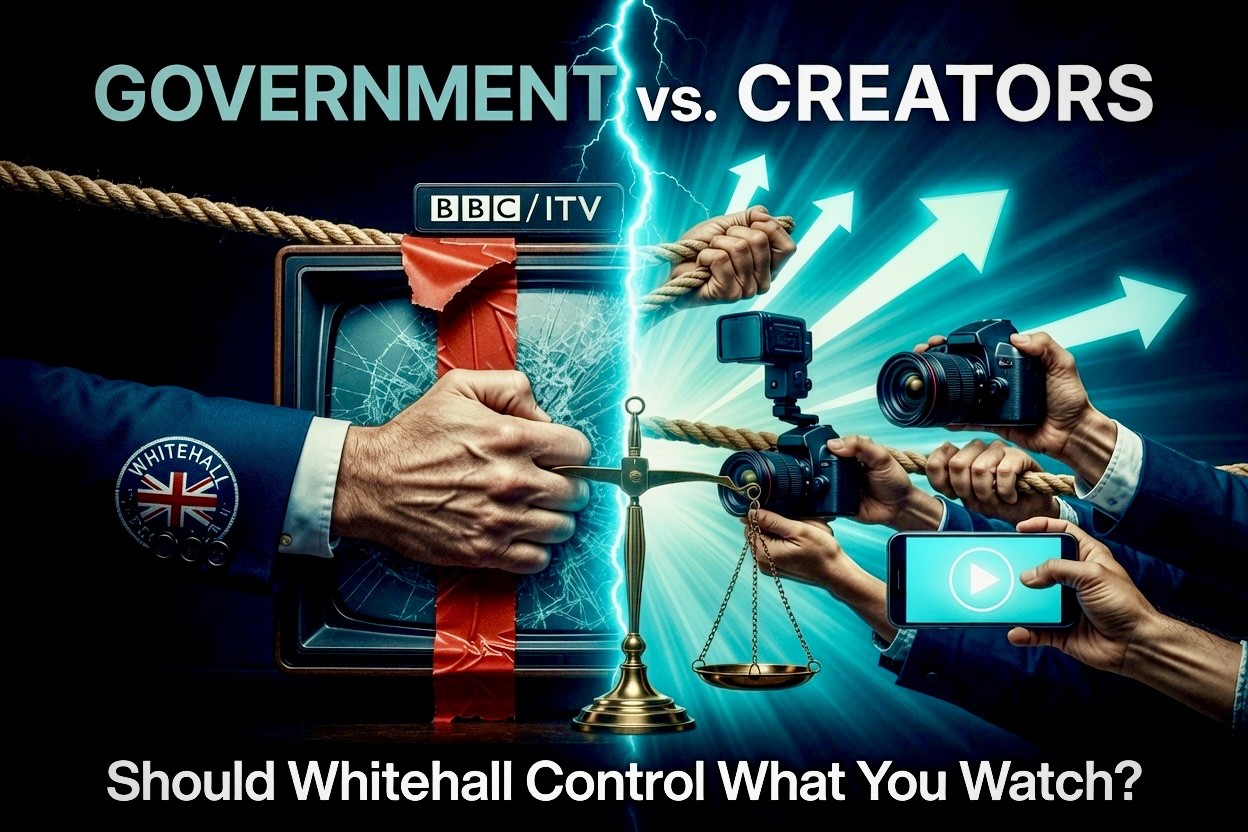
The consultation, "Watch This Space: A New Strategic Direction for UK Media," suggests that online platforms could be required to give greater prominence to content from "trusted" news providers and public service broadcasters.
At first glance, that sounds reasonable.
But I think it raises a much bigger question.
Should Government influence what people see online, or should audiences decide for themselves?
The UK has quietly built an incredible creator economy.
Thousands of British filmmakers, journalists, educators, presenters, commentators and creative entrepreneurs are reaching global audiences through YouTube, TikTok, Instagram, LinkedIn and X. They're building businesses, creating jobs, exporting British creativity to millions of people every day and inspiring the next generation to do the same.
They didn't get there because of regulation.
They got there because they embraced new technology, adapted to changing audience behaviour and earned their audiences one subscriber at a time.
Public service broadcasters remain an important part of the UK's media landscape, and I want them to succeed.
But I don't believe Government should change the rules to give one class of publisher a regulatory advantage on third party platforms where independent creators have spent years building their audiences.
The BBC, ITV and Channel 4 should absolutely compete on YouTube and other digital platforms.
But they should compete… not receive a regulatory advantage.
Government should create a level playing field, not pick winners.
The creator economy is one of Britain's newest creative success stories. We should be asking how we help this sector grow, not how we make it harder for it to compete.
The future of British media shouldn't be about protecting incumbents.
It should be about ensuring the next generation of British creators has every opportunity to succeed.
The consultation closes on 31 August 2026, and it's open to everyone.. not just broadcasters and media organisations.
If you work in media, journalism, AI, the creator economy or simply care about the future of British media… I encourage you to read the consultation and have your say.
https://www.gov.uk/government/consultations/watch-this-space-a-new-strategic-direction-for-uk-media-green-paper-and-public-consultation
I'd genuinely like to hear both sides of this debate. Am I missing something, or should audiences.. not legislation…decide what succeeds online?
For decades, Britain built a global reputation by exporting some of the world's best television formats.
Today, we're exporting British creativity directly to the world.
Not through a handful of broadcasters, but through thousands of independent creators.
To me, that's one of the UK's greatest creative success stories.
And that's why one proposal in the UK Government's new media consultation caught my attention.
The consultation, "Watch This Space: A New Strategic Direction for UK Media," suggests that online platforms could be required to give greater prominence to content from "trusted" news providers and public service broadcasters.
At first glance, that sounds reasonable.
But I think it raises a much bigger question.
Should Government influence what people see online, or should audiences decide for themselves?
The UK has quietly built an incredible creator economy.
Thousands of British filmmakers, journalists, educators, presenters, commentators and creative entrepreneurs are reaching global audiences through YouTube, TikTok, Instagram, LinkedIn and X. They're building businesses, creating jobs, exporting British creativity to millions of people every day and inspiring the next generation to do the same.
They didn't get there because of regulation.
They got there because they embraced new technology, adapted to changing audience behaviour and earned their audiences one subscriber at a time.
Public service broadcasters remain an important part of the UK's media landscape, and I want them to succeed.
But I don't believe Government should change the rules to give one class of publisher a regulatory advantage on third party platforms where independent creators have spent years building their audiences.
The BBC, ITV and Channel 4 should absolutely compete on YouTube and other digital platforms.
But they should compete… not receive a regulatory advantage.
Government should create a level playing field, not pick winners.
The creator economy is one of Britain's newest creative success stories. We should be asking how we help this sector grow, not how we make it harder for it to compete.
The future of British media shouldn't be about protecting incumbents.
It should be about ensuring the next generation of British creators has every opportunity to succeed.
The consultation closes on 31 August 2026, and it's open to everyone.. not just broadcasters and media organisations.
If you work in media, journalism, AI, the creator economy or simply care about the future of British media… I encourage you to read the consultation and have your say.
https://www.gov.uk/government/consultations/watch-this-space-a-new-strategic-direction-for-uk-media-green-paper-and-public-consultation
I'd genuinely like to hear both sides of this debate. Am I missing something, or should audiences.. not legislation…decide what succeeds online?



I don’t see why we need to legislate against them? Because the BBC have every advantage to compete. Including on the same platform as independent creators.. with all of the huge resources the BBC have.
If indi creators got together on another platform and by pure quality of content was able to compete… and earn a living… why should the government get involved in that.
The BBC is welcome to compete on a level playing field.. on YouTube.. with the advantage of its considerable funding and resources.
Let’s not forget the BBC has considerable brand recognition worldwide, its own streaming platform, billions at its disposal.
I think that should be enough.
We don’t need to legislate against indi creators.. many of which we all watch.