The BBC will no longer broadcast or stream live music performances deemed ‘high risk’ as it seeks to contain the fallout from last weekend’s Glastonbury coverage.
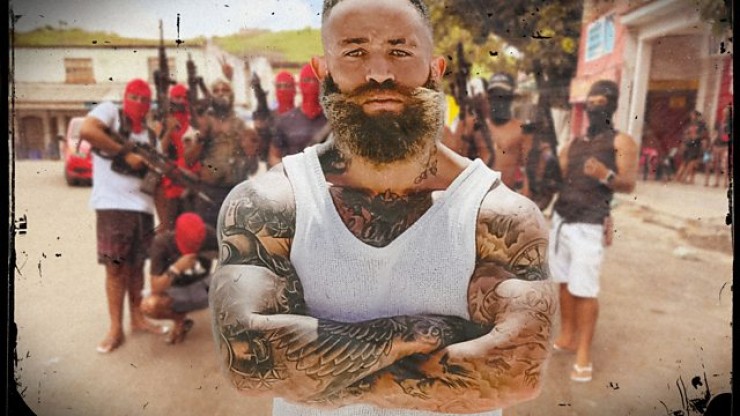
Senior figures at the corporation have described a chain of 'unacceptable' decisions regarding the live broadcast of punk band Bob Vylan that have risked overshadowing the efforts to produce a major, complex broadcast that last year scooped the production team a Bafta for live event coverage.
The move comes as The Times reports that BBC head of music Lorna Clarke has stepped back from her day-to-day role to focus on an investigation into why the live feed was not cut from iPlayer when the band led an on-stage chant of "death to the IDF".
The BBC has confirmed that the punk band - whose set was pulled from iPlayer on Saturday evening, several hours after the livestream - was one of seven artists performing at Glastonbury that were deemed ‘high risk’ prior to the festival.
Each of these acts was deemed suitable for live streaming with 'appropriate mitigations' in the form of language and content warnings.
It has not confirmed whether Kneecap - whose performance immediately after Bob Vylan was already ruled out for live broadcast ahead of the festival, and was subsequently added in an edited form to iPlayer - was one of these seven.
The BBC said the editorial team acted 'in error' in deciding not to cut the feed despite warnings appearing on the streams on two occasions.
It has also indicated that the West Holt Stage feed, where the controversial afternoon performance was hosted, was the lowest-rated of the BBC's five live feeds from the festival, with the bulk of viewing on the Pyramid Stage, home to performances from the likes of Rod Stewart and Olivia Rodrigo, and the secondary Other Stage, where Charlie XCX played.
Confirming that director-general Tim Davie, who had been on site at Glastonbury, made the call not to feature Bob Vylan in any of the festival’s coverage after the set was taken down, the BBC said it is “taking actions to ensure proper accountability for those found to be responsible for those failings in the live broadcast”.
Under new rules, and with immediate effect, any music performances deemed high risk will now not be broadcast live or streamed live.
The BBC has also pledged to provide Editorial Policy support at major music festivals and events to speed up any in-the-moment decisions about what is being broadcast. It will also provide detailed, practical guidance on the threshold for withdrawing a live stream.
'Unquestionably an error of judgement'
With Culture Secretary Lisa Nandy demanding “accountability at the highest level” from the BBC over the matter, the corporation has been keen to be seen to be on the front foot over the broadcast.
In a statement, the BBC said: “We deeply regret that such offensive and deplorable behaviour appeared on the BBC and want to apologise to our viewers and listeners and in particular the Jewish community. We are also unequivocal that there can be no place for antisemitism at, or on, the BBC.”
Davie has offered to meet Jewish BBC staff to hear their concerns and BBC chair Samir Shah has promised “proper accountability for those found to be responsible,” describing the decision not to pull the livestream as “unquestionably an error of judgement”.
Newly-appointed chief content officer Kate Phillips, whose remit in her previous role as director of unscripted included live music coverage such as Glastonbury, said Bob Vylan’s set was “deeply offensive and should never have been aired on our platforms”.
She added: “I’m personally really upset by what happened, and I know the behaviour on stage caused a lot of distress, particularly for our Jewish colleagues throughout the BBC and the Jewish community.
“I’m also sorry that these events have overshadowed the incredible efforts of teams across the organisation who worked tirelessly to bring Glastonbury to our audiences.”
Davie will be quizzed further about the broadcast at a Culture, Media and Sport Committee hearing on 9 September.