
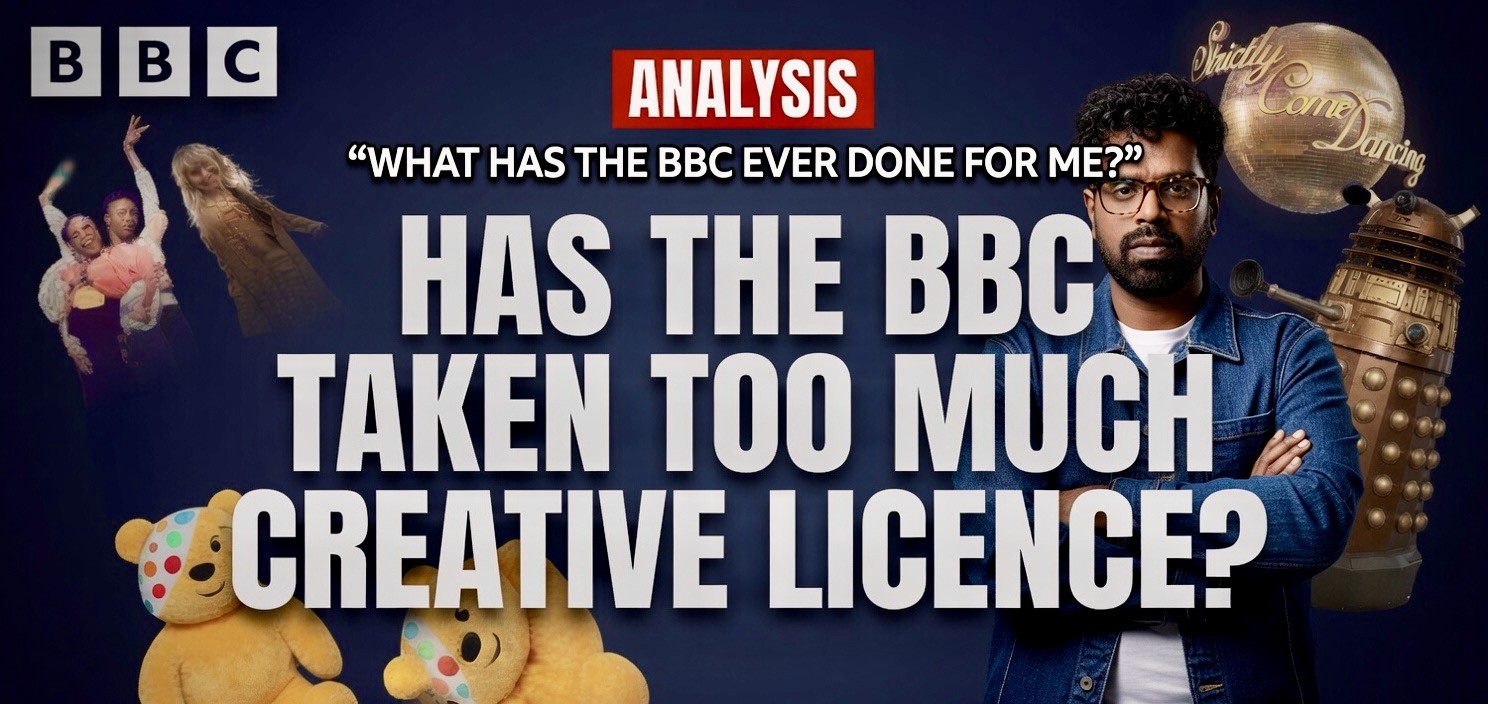
Last week the BBC dropped a glossy, star studded short film fronted by Romesh Ranganathan “What has the BBC ever done for me?”, right on the day of the World Cup final. 📺It’s sparked huge scrutiny. But I think many people are focusing on the wrong points.On the surface, it’s polished public service advocacy for the licence fee. 👍But integrity matters when you’re spending public money on something like this and several claims feel noticeably stretched.Here are the key... Read more
Last week the BBC dropped a glossy, star studded short film fronted by Romesh Ranganathan “What has the BBC ever done for me?”, right on the day of the World Cup final. 📺
It’s sparked huge scrutiny. But I think many people are focusing on the wrong points.
On the surface, it’s polished public service advocacy for the licence fee. 👍
But integrity matters when you’re spending public money on something like this and several claims feel noticeably stretched.
Here are the key issues:
• Chris Martin of Coldplay appears playing piano in the Queen Vic pub scene, yet he is a major commercial artist signed to a major label not a BBC creation or exclusive talent. 🎤
• The video claims the BBC “introduced the nation to someone called… Adele,” but Adele signed independently to XL Recordings via a Myspace demo. The BBC gave her valuable early exposure (Later… with Jools Holland and the Sound of 2008 poll), but it didn’t discover her.
• Daleks from Doctor Who feature prominently, even though the 2026 Christmas special was recently cancelled, the current showrunner and producer are exiting, and the series is in transition amid creative criticisms. 🛸
• Alan Carr appears, despite building his breakthrough fame and signature shows like Chatty Man primarily on Channel 4 before later BBC work.
• Louis Theroux has increasingly worked with other platforms (including a 2026 Netflix documentary and Sky projects), proving his career would very likely thrive even without the BBC.
• The BBC claims it has raised £2.5 billion for charity over the years, but this money comes directly from public donations during events like Children in Need and Comic Relief ..the BBC hosts the shows, but the public does the giving.
• It also boasts of adding £6.5 billion to the UK economy, yet these figures are hard to independently verify and easy to debate.
Many of us still value elements of the BBC.
But self promotion should withstand scrutiny.
When the answer to “What has the BBC ever done for me?” relies on stretching credits for Adele, borrowing Chris Martin, and celebrating Doctor Who amid resets, it invites exactly the scepticism it tries to disarm.
What do you think? Does the BBC still represent great British value, or has its marketing lost touch with how audiences actually discover and consume culture today?
Honest discussion welcome!
It’s sparked huge scrutiny. But I think many people are focusing on the wrong points.
On the surface, it’s polished public service advocacy for the licence fee. 👍
But integrity matters when you’re spending public money on something like this and several claims feel noticeably stretched.
Here are the key issues:
• Chris Martin of Coldplay appears playing piano in the Queen Vic pub scene, yet he is a major commercial artist signed to a major label not a BBC creation or exclusive talent. 🎤
• The video claims the BBC “introduced the nation to someone called… Adele,” but Adele signed independently to XL Recordings via a Myspace demo. The BBC gave her valuable early exposure (Later… with Jools Holland and the Sound of 2008 poll), but it didn’t discover her.
• Daleks from Doctor Who feature prominently, even though the 2026 Christmas special was recently cancelled, the current showrunner and producer are exiting, and the series is in transition amid creative criticisms. 🛸
• Alan Carr appears, despite building his breakthrough fame and signature shows like Chatty Man primarily on Channel 4 before later BBC work.
• Louis Theroux has increasingly worked with other platforms (including a 2026 Netflix documentary and Sky projects), proving his career would very likely thrive even without the BBC.
• The BBC claims it has raised £2.5 billion for charity over the years, but this money comes directly from public donations during events like Children in Need and Comic Relief ..the BBC hosts the shows, but the public does the giving.
• It also boasts of adding £6.5 billion to the UK economy, yet these figures are hard to independently verify and easy to debate.
Many of us still value elements of the BBC.
But self promotion should withstand scrutiny.
When the answer to “What has the BBC ever done for me?” relies on stretching credits for Adele, borrowing Chris Martin, and celebrating Doctor Who amid resets, it invites exactly the scepticism it tries to disarm.
What do you think? Does the BBC still represent great British value, or has its marketing lost touch with how audiences actually discover and consume culture today?
Honest discussion welcome!


That said, the counter argument is that a good number of those programmes (consumer advice, children’s content, music, etc.) already exist on other channels and platforms. Martin Lewis, for example, continues to make consumer programmes for ITV, and similar content is available elsewhere because the audience demand is clearly there.
The comparison with privatised water companies is an interesting one, though broadcasting feels a bit different .. viewers can switch channels or platforms quite easily, whereas clean water is a more fundamental necessity.
And on the World Cup moment… the on screen QR code for the TV licence did feel a little heavy handed to a lot of people…when the BBC needs to win goodwill.
I think it’s marketing team should bear that in mind.