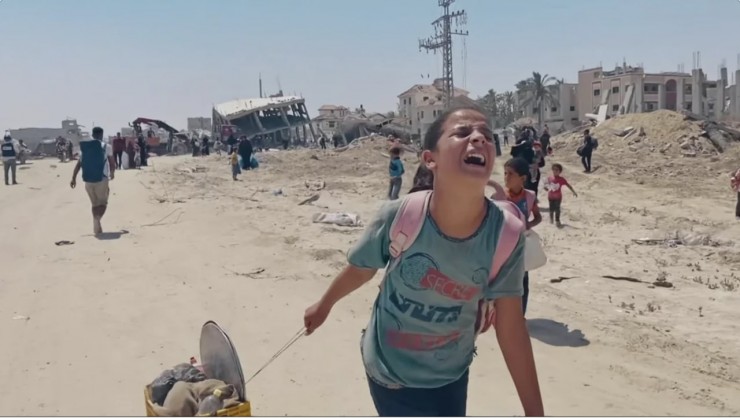
The BBC will embed a senior executive producer inside every ‘high-risk’ long-form film indie production for BBC News as it tightens up its compliance following problems with its doc Gaza: How to Survive a War Zone.
Docs that meet the ‘high-risk’ threshold will also be subject to a ‘First Gate’ process that requires all potential compliance considerations to be considered and listed, including rigorous social media and background checks, before a formal commission can be greenlit.
BBC News will also create a new director role on the BBC News Board, with strategic leadership of long-form output across BBC News.
Ruling: accuracy breach, but cleared on impartiality
The BBC’s long-awaited internal review into the doc, which aired in February, ruled that it breached accuracy guidelines.
Though the film will not return to iPlayer in its current form, some of its material could be reworked into short-form films for iPlayer.
While absolving Hoyo Films of impartiality concerns, and declaring it did not intentionally mislead the broadcaster, it said the indie “bears most responsibility” for failing to inform viewers that the programme’s child narrator was the son of a Hamas official.
When the programme aired, three people at Hoyo knew of the child’s father’s position, but nobody at the BBC had been informed – “a significant oversight” and a “serious editorial breach” by the production company, according to the report, which was compiled by director of editorial complaints and reviews Peter Johnston.
But it said the BBC team was not “sufficiently proactive” in its initial editorial checks and demonstrated a “lack of critical oversight of unanswered or partially answered questions” ahead of the documentary’s broadcast.
Narrator checks
In future, narrators will be subject to a higher level of scrutiny, and producers will have to provide assurance that their chosen narrator’s background, connections and/ or viewpoints will not put either them or the BBC in a difficult position or raise questions of impartiality.
Programme makers should also default to use and translate the word ‘Yahud/Yahudi’ into ‘Jews/Jewish’ in future, with any alternatives referred up to senior executive editor level and made transparent to the audience if use is approved.
BBC director general Tim Davie said the report “identifies a significant failing in relation to accuracy in this documentary”, adding: “I am sorry for this failing.”
He said the new measures represented the BBC taking action on two fronts: “Fair, clear and appropriate actions to ensure proper accountability and the immediate implementation of steps to prevent such errors being repeated.”
Hoyo Films said in a statement:
“We are pleased that the report found that there was no evidence of inappropriate influence on the content of the documentary from any third party.
“We appreciate the rigorous nature of this investigation, and its findings that Hoyo Films did not intentionally mislead the BBC, that there were no other breaches of the editorial guidelines in the programme, and that there was no evidence to suggest that the programme funds were spent other than for reasonable, production-related purposes.”
The report considered 5,000 documents from a 10-month production period, as well as 150 hours of material filmed during production.