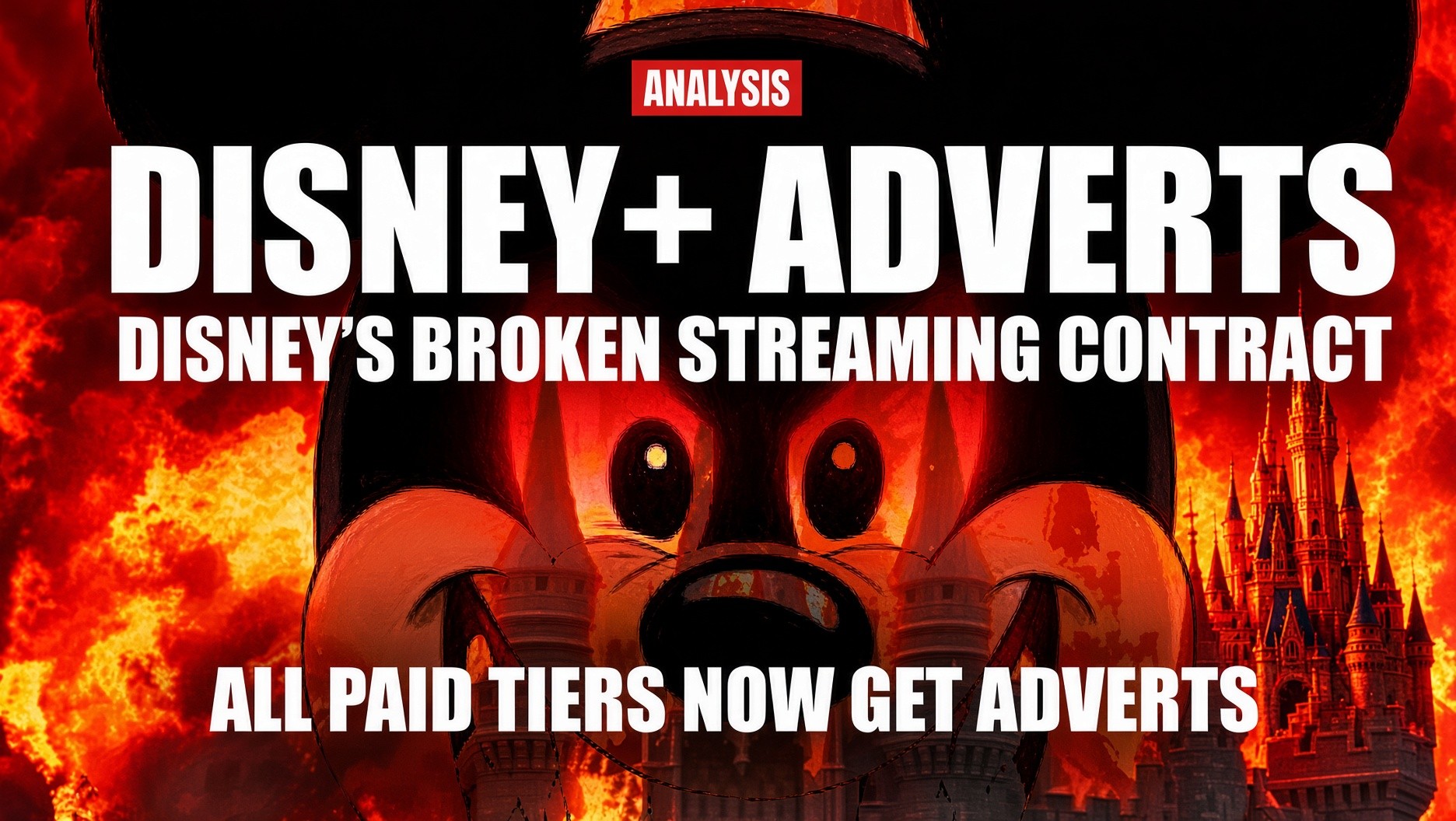
📺 Disney’s Broken Streaming ContractIt started with a simple promise: pay a subscription fee and escape the endless commercial breaks of cable TV. For years, millions of us happily signed up for that unwritten contract.That contract is now broken.💰 When Disney+ launched in the UK in 2020, there was one tier: £5.99 a month, completely ad free. Today there are three, and the top two both sit well above that original figure. Standard with Ads is £5.99, Standard is £9.99, and... Read more
📺 Disney’s Broken Streaming Contract
It started with a simple promise: pay a subscription fee and escape the endless commercial breaks of cable TV. For years, millions of us happily signed up for that unwritten contract.
That contract is now broken.
💰 When Disney+ launched in the UK in 2020, there was one tier: £5.99 a month, completely ad free. Today there are three, and the top two both sit well above that original figure. Standard with Ads is £5.99, Standard is £9.99, and Premium is £14.99, and Premium is no longer really ad free either.
Because the real change isn’t just the price. Disney quietly rewrote its subscriber agreements to grant itself the explicit right to force ads, promotions and brand sponsorships onto every tier, including Premium.
🎭 The corporate spin? Still “ad free”, because they won’t interrupt the middle of your film. The reality? An unskippable commercial before the video starts is still an advert. For episodic TV and binge watchers, that’s a mandatory ad loop every time a new episode loads.
📈 Why do it? Because the maths is undeniable, ads are wildly profitable. Streamers have realised they can double dip. Annoy Premium subscribers with pre rolls, collect ad revenue from people who used to see none, then lay the groundwork to eventually sell an “Ultra Premium” tier just to strip the ads away again.
🤔 Is it working for Disney though? In its last full fiscal year, Disney’s streaming arm pulled in $20.8 billion from subscription fees globally, against just $3.7 billion from advertising, roughly six times more revenue from subscribers than from ads.
Squeezing extra ad dollars out of already paying Premium customers is a rounding error next to subscriber income, which suggests this is less about maximising revenue and more about training customers to accept ads everywhere, ahead of future price rises.
We’re now paying more than double the original price for the exact premium broadcast cable model many paid to escape. 🔁
It started with a simple promise: pay a subscription fee and escape the endless commercial breaks of cable TV. For years, millions of us happily signed up for that unwritten contract.
That contract is now broken.
💰 When Disney+ launched in the UK in 2020, there was one tier: £5.99 a month, completely ad free. Today there are three, and the top two both sit well above that original figure. Standard with Ads is £5.99, Standard is £9.99, and Premium is £14.99, and Premium is no longer really ad free either.
Because the real change isn’t just the price. Disney quietly rewrote its subscriber agreements to grant itself the explicit right to force ads, promotions and brand sponsorships onto every tier, including Premium.
🎭 The corporate spin? Still “ad free”, because they won’t interrupt the middle of your film. The reality? An unskippable commercial before the video starts is still an advert. For episodic TV and binge watchers, that’s a mandatory ad loop every time a new episode loads.
📈 Why do it? Because the maths is undeniable, ads are wildly profitable. Streamers have realised they can double dip. Annoy Premium subscribers with pre rolls, collect ad revenue from people who used to see none, then lay the groundwork to eventually sell an “Ultra Premium” tier just to strip the ads away again.
🤔 Is it working for Disney though? In its last full fiscal year, Disney’s streaming arm pulled in $20.8 billion from subscription fees globally, against just $3.7 billion from advertising, roughly six times more revenue from subscribers than from ads.
Squeezing extra ad dollars out of already paying Premium customers is a rounding error next to subscriber income, which suggests this is less about maximising revenue and more about training customers to accept ads everywhere, ahead of future price rises.
We’re now paying more than double the original price for the exact premium broadcast cable model many paid to escape. 🔁