I thought importing credits from a spreadsheet would be easy. It was not. 🙃
At first, the plan sounded almost boring:
Upload an Excel file → find the roles and names → turn them into credits.
How hard could that... Read more
I thought importing credits from a spreadsheet would be easy. It was not. 🙃
At first, the plan sounded almost boring:
Upload an Excel file → find the roles and names → turn them into credits.
How hard could that be?
Very hard, apparently...
Some people put the role and name in separate columns. Some put them underneath each other. Some use merged cells, empty rows or several names for one role. Others write everything in one cell with a dash. Music credits are their own special universe. And, of course, every spreadsheet contains at least one mysterious note that made perfect sense to its author three months ago.
My first importer tried to understand all of this with regular rules. That worked until a file looked slightly different.
Then I added an LLM. It understood the meaning much better, but the results were unstable: one document looked great, while another turned professions into headings, lost names or created completely wrong blocks.
The next attempt gave the model stricter choices. That made it more predictable—but also meant that if my code failed to suggest the correct option, the model had no way to choose it. Even a correct answer became impossible.
There were also timeouts, incomplete answers and the especially fun scenario where the model finished the expensive part successfully, but the application rejected the result afterwards. 💸
So I ended up rebuilding the process again.
Now the system first preserves the original spreadsheet exactly as it is. The model only explains how the existing pieces relate to each other: this is a role, these are the people, this is a section title, this belongs to one musical work, and this strange bit probably needs human attention.
The application then checks everything before creating the project. It should never silently lose text, invent a name or turn one unclear row into a completely broken import.
Is it perfect now? No. Human spreadsheets are impressively creative.
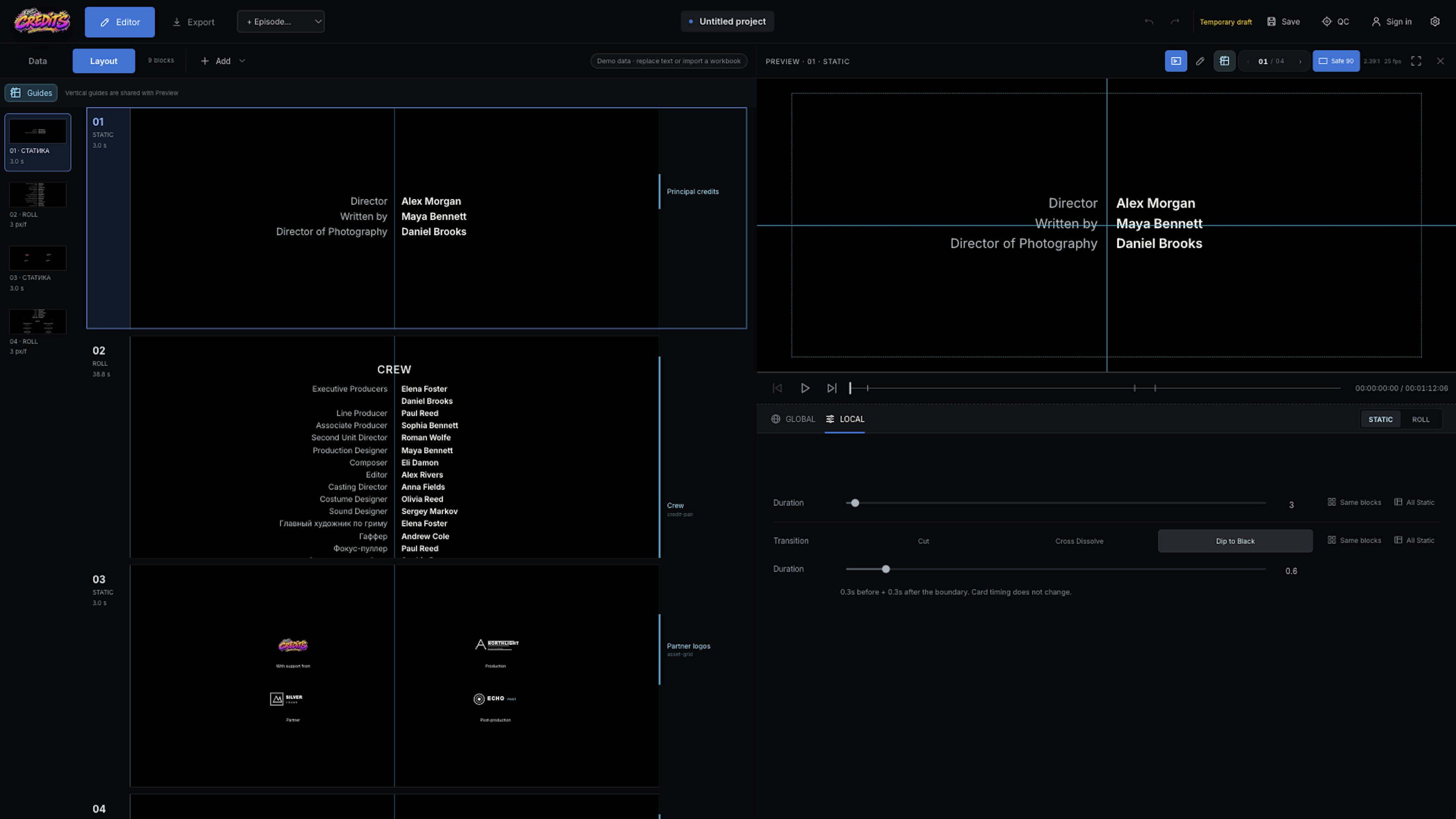
But the goal is simple: upload the document, quickly check a few questionable places, choose the typography and export—without spending an afternoon copying 300 names by hand.
I’m still testing this on as many different credit documents as I can find. If you have a real working spreadsheet from a film, series, commercial or music video that you can safely share, send it my way. It would be genuinely useful. 👀
At first, the plan sounded almost boring:
Upload an Excel file → find the roles and names → turn them into credits.
How hard could that be?
Very hard, apparently...
Some people put the role and name in separate columns. Some put them underneath each other. Some use merged cells, empty rows or several names for one role. Others write everything in one cell with a dash. Music credits are their own special universe. And, of course, every spreadsheet contains at least one mysterious note that made perfect sense to its author three months ago.
My first importer tried to understand all of this with regular rules. That worked until a file looked slightly different.
Then I added an LLM. It understood the meaning much better, but the results were unstable: one document looked great, while another turned professions into headings, lost names or created completely wrong blocks.
The next attempt gave the model stricter choices. That made it more predictable—but also meant that if my code failed to suggest the correct option, the model had no way to choose it. Even a correct answer became impossible.
There were also timeouts, incomplete answers and the especially fun scenario where the model finished the expensive part successfully, but the application rejected the result afterwards. 💸
So I ended up rebuilding the process again.
Now the system first preserves the original spreadsheet exactly as it is. The model only explains how the existing pieces relate to each other: this is a role, these are the people, this is a section title, this belongs to one musical work, and this strange bit probably needs human attention.
The application then checks everything before creating the project. It should never silently lose text, invent a name or turn one unclear row into a completely broken import.
Is it perfect now? No. Human spreadsheets are impressively creative.
But the goal is simple: upload the document, quickly check a few questionable places, choose the typography and export—without spending an afternoon copying 300 names by hand.
I’m still testing this on as many different credit documents as I can find. If you have a real working spreadsheet from a film, series, commercial or music video that you can safely share, send it my way. It would be genuinely useful. 👀