Max Headroom: The 80s GenAI IllusionHow 1980’s greatest TV trick predicted the future of synthetic mediaModern AI driven synthetic presenters now deliver news in China, South Korea and beyond. Platforms like Synthesia power digital anchors that read scripts in multiple languages around the clock. Livestream shopping hosts never tire.Experimental channels stream fully generated content nonstop. What once felt impossible now fills screens daily.📺 The 1980s TV WorldBack then... Read more
Max Headroom: The 80s GenAI Illusion
How 1980’s greatest TV trick predicted the future of synthetic media
Modern AI driven synthetic presenters now deliver news in China, South Korea and beyond. Platforms like Synthesia power digital anchors that read scripts in multiple languages around the clock. Livestream shopping hosts never tire.
Experimental channels stream fully generated content nonstop. What once felt impossible now fills screens daily.
📺 The 1980s TV World
Back then television meant real people in real studios. Synthetic TV presenters were pure science fiction. Viewers expected flesh and blood hosts. Anything digital stayed in cartoons or crude graphics. No one imagined a talking head stealing the spotlight.
💡 How Max Headroom Arrived
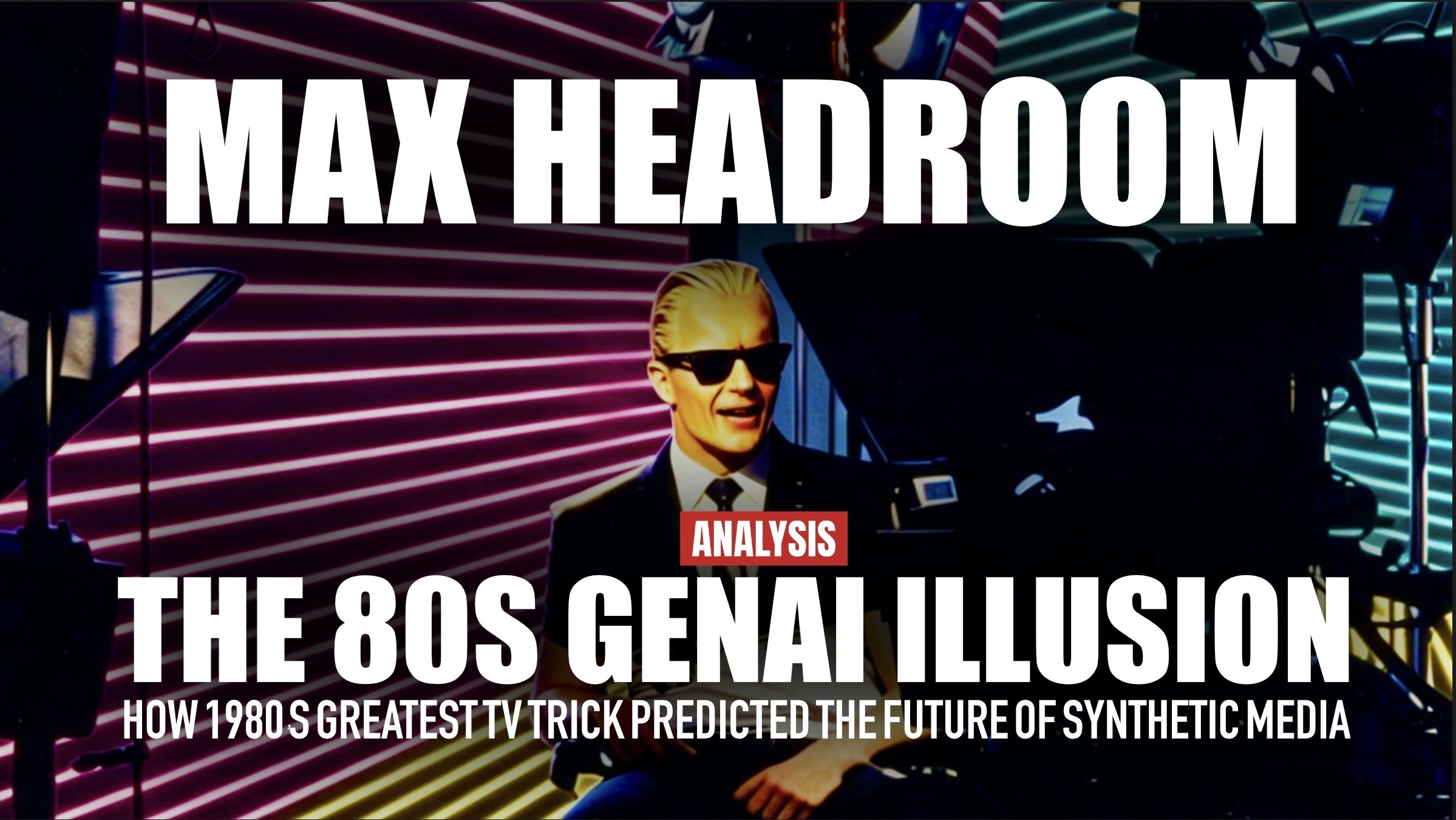
In 1985 British creators George Stone, Annabel Jankel and Rocky Morton invented Max for Channel 4. They wanted a computer generated music video host. Real CGI couldn’t handle a talking face yet, so they cast Canadian American actor Matt Frewer. Prosthetics, latex foam and a fibreglass suit turned him into the iconic figure. Over four hours of makeup plus blue screen and harsh lighting created the illusion. Max debuted in the film Max Headroom 20 Minutes into the Future as the digital twin of journalist Edison Carter.
🎭 Keeping the Illusion Alive
Producers marketed Max as the first computer generated presenter. In the UK they urged Frewer to stay silent about the actor underneath. The goal was mystique and satire of bland TV hosts.
Revealing the human would shatter the joke that technology had already arrived. The stuttering voice and geometric backgrounds sold the digital dream perfectly.
🤖 AI Perceptions Now
Today AI faces both excitement and deep distrust. Deepfakes blur truth while uncanny valley faces unsettle viewers. Perfect synthetic humans that pass as real raise bigger fears about deception.
✨ Embracing the Glitch
Max succeeded by looking clearly generated. His flaws invited affection and laughter. Modern photorealistic AI risks the opposite. When something appears human yet is not, distrust grows far stronger than any visible glitch ever caused.
🌟 Pioneer Spirit
Max Headroom may have faked being digital yet he remains a true pioneer. Plans now exist to revive him with actor Matt Frewer plus genuine CGI. Producers could lean on GenAI systems if they choose. The irony feels perfect. The character who pretended to be digital now returns as the real thing.
😊 Looking Forward
Max proved imagination leads the way. His return celebrates how far we have come while reminding us to keep the human spark alive.
What does a fully trusted synthetic personality look like to you in the years ahead?
How 1980’s greatest TV trick predicted the future of synthetic media
Modern AI driven synthetic presenters now deliver news in China, South Korea and beyond. Platforms like Synthesia power digital anchors that read scripts in multiple languages around the clock. Livestream shopping hosts never tire.
Experimental channels stream fully generated content nonstop. What once felt impossible now fills screens daily.
📺 The 1980s TV World
Back then television meant real people in real studios. Synthetic TV presenters were pure science fiction. Viewers expected flesh and blood hosts. Anything digital stayed in cartoons or crude graphics. No one imagined a talking head stealing the spotlight.
💡 How Max Headroom Arrived
In 1985 British creators George Stone, Annabel Jankel and Rocky Morton invented Max for Channel 4. They wanted a computer generated music video host. Real CGI couldn’t handle a talking face yet, so they cast Canadian American actor Matt Frewer. Prosthetics, latex foam and a fibreglass suit turned him into the iconic figure. Over four hours of makeup plus blue screen and harsh lighting created the illusion. Max debuted in the film Max Headroom 20 Minutes into the Future as the digital twin of journalist Edison Carter.
🎭 Keeping the Illusion Alive
Producers marketed Max as the first computer generated presenter. In the UK they urged Frewer to stay silent about the actor underneath. The goal was mystique and satire of bland TV hosts.
Revealing the human would shatter the joke that technology had already arrived. The stuttering voice and geometric backgrounds sold the digital dream perfectly.
🤖 AI Perceptions Now
Today AI faces both excitement and deep distrust. Deepfakes blur truth while uncanny valley faces unsettle viewers. Perfect synthetic humans that pass as real raise bigger fears about deception.
✨ Embracing the Glitch
Max succeeded by looking clearly generated. His flaws invited affection and laughter. Modern photorealistic AI risks the opposite. When something appears human yet is not, distrust grows far stronger than any visible glitch ever caused.
🌟 Pioneer Spirit
Max Headroom may have faked being digital yet he remains a true pioneer. Plans now exist to revive him with actor Matt Frewer plus genuine CGI. Producers could lean on GenAI systems if they choose. The irony feels perfect. The character who pretended to be digital now returns as the real thing.
😊 Looking Forward
Max proved imagination leads the way. His return celebrates how far we have come while reminding us to keep the human spark alive.
What does a fully trusted synthetic personality look like to you in the years ahead?