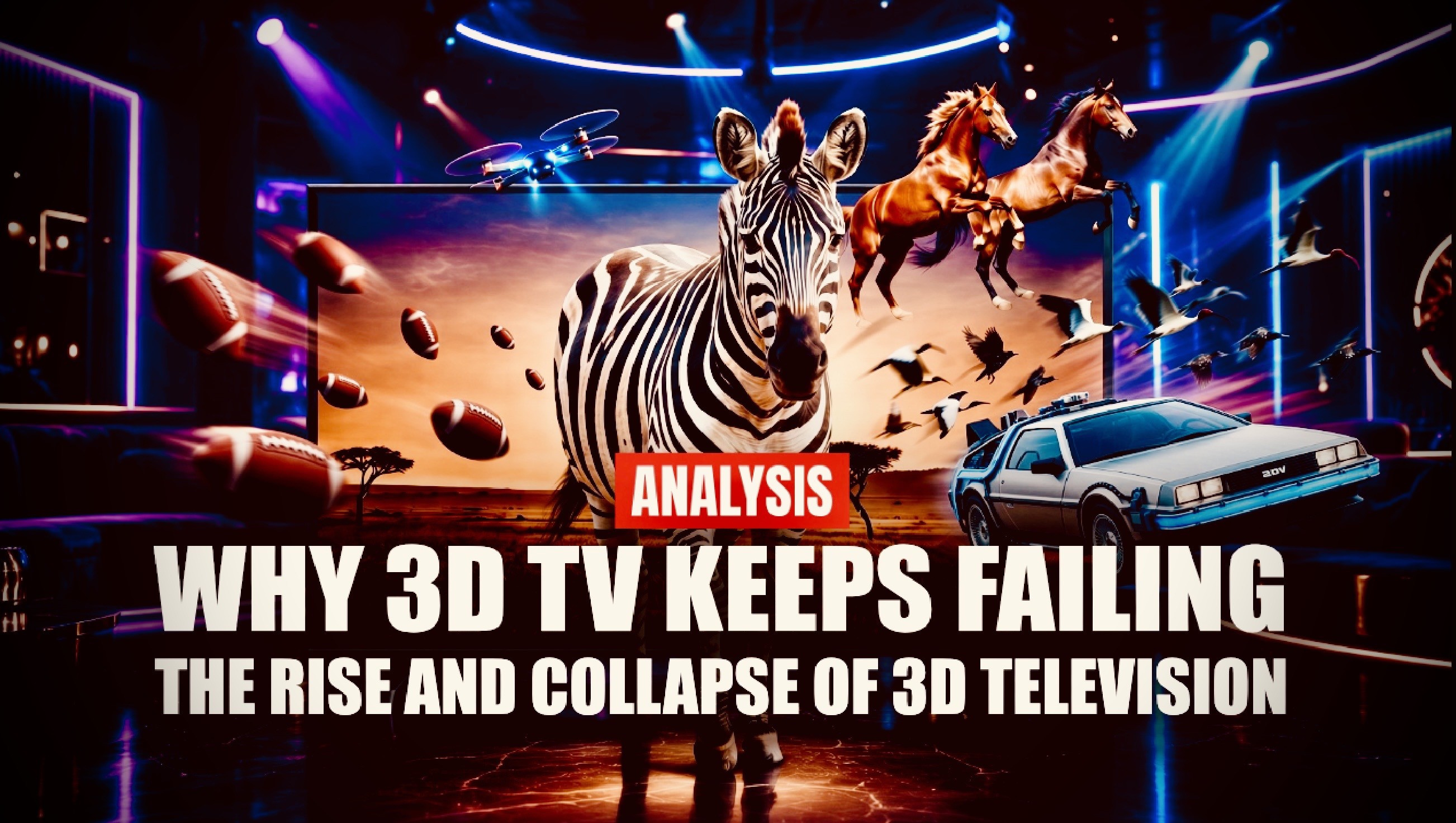
The Rise and Collapse of 3D Television🎬 Sound transformed cinema. Color deepened storytelling. Every innovation succeeded because it served narrative necessity.3D technology never managed that trick.The 1950s brought the boom. Bwana Devil. Creature from the Black Lagoon. Audiences packed theaters for novelty. The craze faded within years. Stories worked perfectly well in flat images.In the 1980s we had tests with Jaws 3D and Nightmare on Elm Street 4 experimenting with 3D sequences.... Read more
The Rise and Collapse of 3D Television
🎬 Sound transformed cinema. Color deepened storytelling. Every innovation succeeded because it served narrative necessity.
3D technology never managed that trick.
The 1950s brought the boom. Bwana Devil. Creature from the Black Lagoon. Audiences packed theaters for novelty. The craze faded within years. Stories worked perfectly well in flat images.
In the 1980s we had tests with Jaws 3D and Nightmare on Elm Street 4 experimenting with 3D sequences. But these felt like cheap tricks.
🚀 Then Avatar Changed Everything (2009)
James Cameron proved depth could enhance rather than distract. Pandora felt like a living world. Floating mountains and aerial battles gained genuine spatial presence.
The technology evolved. Gone were the red and cyan anaglyph glasses. Polarized lenses now delivered full color stereoscopy.
Cinemas charged premium prices overnight. Manufacturers rushed to add 3D to every new television set
By 2010, Sky launched a dedicated channel. The BBC tested extensively. David Attenborough hosted nature programs in depth. Everyone expected permanent transformation.
📺 Why Home 3D Failed
Content stayed scarce. Production costs soared. Viewing figures remained modest.
Most importantly: glasses interrupted casual viewing. Television involves multitasking and conversation. Putting on glasses broke that rhythm in ways cinema attendance never did.
No story needed 3D to work. A shark attacks the same way on flat or stereoscopic screens. Two people conversing gain nothing essential from spatial separation.
The effect enhanced spectacle but rarely served narrative.
That made it feel gimmicky.
🎭 The Hard Truth
Sky closed its linear channel in June 2015. The BBC had already stopped new production after 2013. Manufacturers dropped the feature from sets.
3D television quietly vanished.
Cinema keeps the format alive for select blockbusters. Home viewing won’t return in its previous form. Audiences moved toward better resolution, richer color, and on demand convenience.
The 3D VR headsets also have their place, with James Cameron even describing it as the definitive way to watch Avatar.
The lesson: technology succeeds when it serves story, not the other way around.
Until creators find narratives that genuinely cannot exist without depth, the format will struggle for relevance.
Will 3D TV in the home ever make a comeback?
————————————
Tomorrows Story :
HOW WARHOL LEGITIMISED DIGITAL ART : AND BECAME THE GRANDFATHER OF CREATIVE COMPUTING
It’s live on my substack tomorrow morning.
Along with a lots of entertaining Tech, Media & science stories.
(I only post the media ones here)
https://nicknmedia.substack.com
🎬 Sound transformed cinema. Color deepened storytelling. Every innovation succeeded because it served narrative necessity.
3D technology never managed that trick.
The 1950s brought the boom. Bwana Devil. Creature from the Black Lagoon. Audiences packed theaters for novelty. The craze faded within years. Stories worked perfectly well in flat images.
In the 1980s we had tests with Jaws 3D and Nightmare on Elm Street 4 experimenting with 3D sequences. But these felt like cheap tricks.
🚀 Then Avatar Changed Everything (2009)
James Cameron proved depth could enhance rather than distract. Pandora felt like a living world. Floating mountains and aerial battles gained genuine spatial presence.
The technology evolved. Gone were the red and cyan anaglyph glasses. Polarized lenses now delivered full color stereoscopy.
Cinemas charged premium prices overnight. Manufacturers rushed to add 3D to every new television set
By 2010, Sky launched a dedicated channel. The BBC tested extensively. David Attenborough hosted nature programs in depth. Everyone expected permanent transformation.
📺 Why Home 3D Failed
Content stayed scarce. Production costs soared. Viewing figures remained modest.
Most importantly: glasses interrupted casual viewing. Television involves multitasking and conversation. Putting on glasses broke that rhythm in ways cinema attendance never did.
No story needed 3D to work. A shark attacks the same way on flat or stereoscopic screens. Two people conversing gain nothing essential from spatial separation.
The effect enhanced spectacle but rarely served narrative.
That made it feel gimmicky.
🎭 The Hard Truth
Sky closed its linear channel in June 2015. The BBC had already stopped new production after 2013. Manufacturers dropped the feature from sets.
3D television quietly vanished.
Cinema keeps the format alive for select blockbusters. Home viewing won’t return in its previous form. Audiences moved toward better resolution, richer color, and on demand convenience.
The 3D VR headsets also have their place, with James Cameron even describing it as the definitive way to watch Avatar.
The lesson: technology succeeds when it serves story, not the other way around.
Until creators find narratives that genuinely cannot exist without depth, the format will struggle for relevance.
Will 3D TV in the home ever make a comeback?
————————————
Tomorrows Story :
HOW WARHOL LEGITIMISED DIGITAL ART : AND BECAME THE GRANDFATHER OF CREATIVE COMPUTING
It’s live on my substack tomorrow morning.
Along with a lots of entertaining Tech, Media & science stories.
(I only post the media ones here)
https://nicknmedia.substack.com