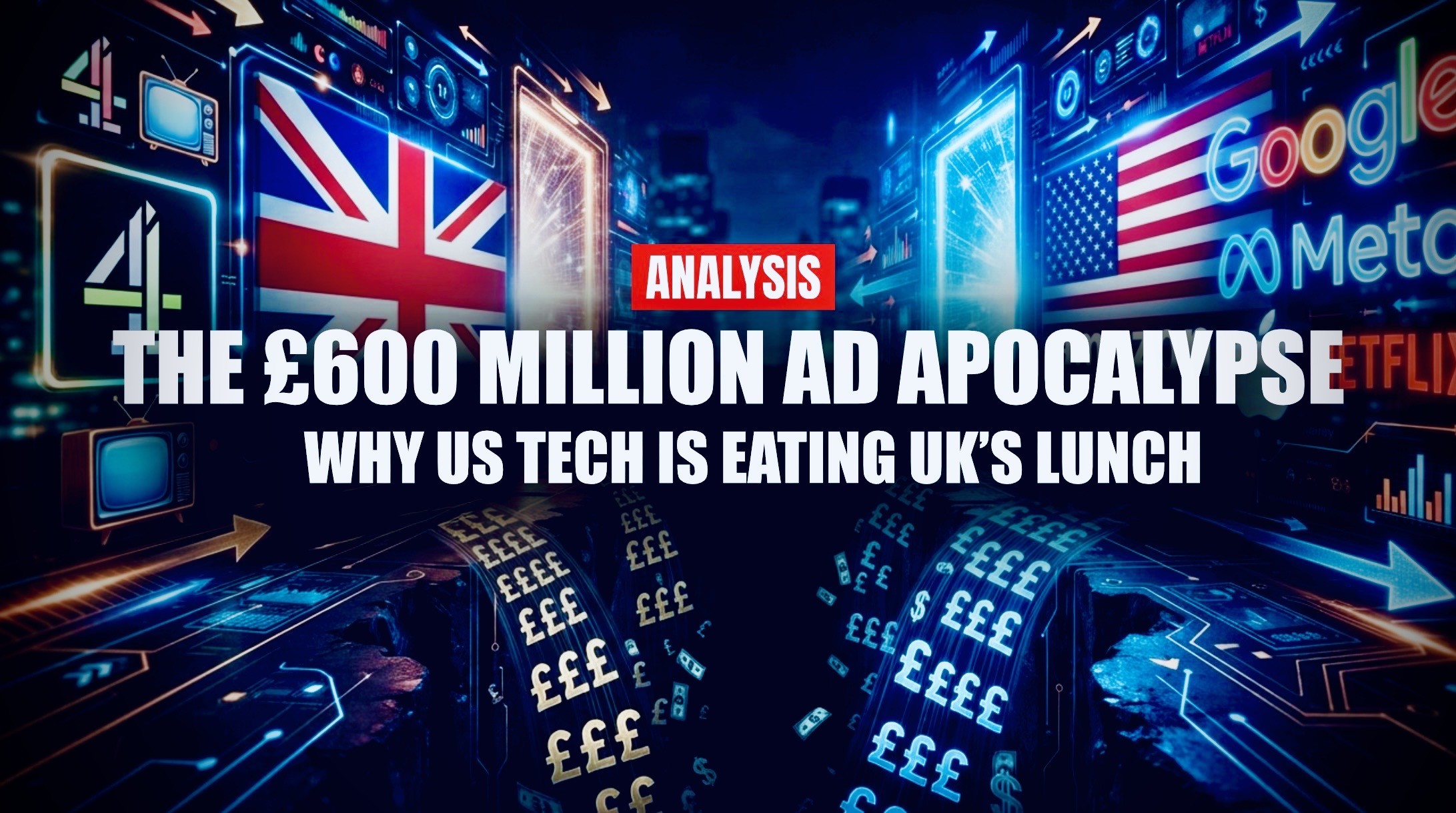
The £600 Million Ad ApocalypseWhy US tech is eating UK’s lunchFor years, British broadcasters told themselves a comforting story. Linear TV was not dying…just evolving. Audiences would move online, but advertising money would follow into their own streaming services.🚨 That story has become harder to sustain.📺 In 2025, linear TV advertising fell 10% to £2.8 billion. Commercial broadcaster revenues slipped from £5 billion to £4.8 billion. BVOD platforms (ITVX, Channel 4,... Read more
The £600 Million Ad Apocalypse
Why US tech is eating UK’s lunch
For years, British broadcasters told themselves a comforting story. Linear TV was not dying…just evolving. Audiences would move online, but advertising money would follow into their own streaming services.
🚨 That story has become harder to sustain.
📺 In 2025, linear TV advertising fell 10% to £2.8 billion. Commercial broadcaster revenues slipped from £5 billion to £4.8 billion. BVOD platforms (ITVX, Channel 4, My5) grew to £1.15 billion. It softened the blow, but did not replace what was lost. Since 2019, commercial broadcaster ad revenues are down more than £600 million in real terms.
Here’s where the money went. Of every pound that left linear TV, only 21 pence returned to broadcasters via streaming apps. The rest moved to social video, search, retail media.
Google and Meta capture most of that shift. Amazon and Netflix, with expanding ad supported tiers, now sit in the same competitive set as ITV, Channel 4 and Channel 5. They’re drawing budgets that once had nowhere else to go.
📺 The broadcasters’ response has been cautious. A shared self serve marketplace. Better addressable capabilities. Joint measurement tools. It’s rational defensive work. But defensive work may not be enough anymore.
📺 A return to linear dominance looks unlikely. More ambitious moves remain possible: deeper consolidation, stronger regulatory prominence for public service content, clearer measurement standards, sharper focus on high attention, brand safe environments.
The real loss is in what funded original drama, news, regional storytelling. That revenue has moved to Google, Meta, and the streaming giants.
💭The most defensible strategy is accelerated consolidation and joint infrastructure. A true competitor grade self serve platform is achievable. The harder play is positioning themselves as the regulated, premium alternative to the algorithmic feed. That’s about winning on trust, measurement transparency, and cultural cache when advertisers care about those things.
🚀It requires a lot of goodwill and internal discipline.
Whether that’s realistic is the question.
————————————
For anyone wanting tomorrows story now :
SPACE ELEVATORS: INTO ORBIT FOR FREE : WILL THIS SCI-FI TECH EVER GET OFF THE GROUND?
It’s live on my substack.
https://nicknmedia.substack.com
Why US tech is eating UK’s lunch
For years, British broadcasters told themselves a comforting story. Linear TV was not dying…just evolving. Audiences would move online, but advertising money would follow into their own streaming services.
🚨 That story has become harder to sustain.
📺 In 2025, linear TV advertising fell 10% to £2.8 billion. Commercial broadcaster revenues slipped from £5 billion to £4.8 billion. BVOD platforms (ITVX, Channel 4, My5) grew to £1.15 billion. It softened the blow, but did not replace what was lost. Since 2019, commercial broadcaster ad revenues are down more than £600 million in real terms.
Here’s where the money went. Of every pound that left linear TV, only 21 pence returned to broadcasters via streaming apps. The rest moved to social video, search, retail media.
Google and Meta capture most of that shift. Amazon and Netflix, with expanding ad supported tiers, now sit in the same competitive set as ITV, Channel 4 and Channel 5. They’re drawing budgets that once had nowhere else to go.
📺 The broadcasters’ response has been cautious. A shared self serve marketplace. Better addressable capabilities. Joint measurement tools. It’s rational defensive work. But defensive work may not be enough anymore.
📺 A return to linear dominance looks unlikely. More ambitious moves remain possible: deeper consolidation, stronger regulatory prominence for public service content, clearer measurement standards, sharper focus on high attention, brand safe environments.
The real loss is in what funded original drama, news, regional storytelling. That revenue has moved to Google, Meta, and the streaming giants.
💭The most defensible strategy is accelerated consolidation and joint infrastructure. A true competitor grade self serve platform is achievable. The harder play is positioning themselves as the regulated, premium alternative to the algorithmic feed. That’s about winning on trust, measurement transparency, and cultural cache when advertisers care about those things.
🚀It requires a lot of goodwill and internal discipline.
Whether that’s realistic is the question.
————————————
For anyone wanting tomorrows story now :
SPACE ELEVATORS: INTO ORBIT FOR FREE : WILL THIS SCI-FI TECH EVER GET OFF THE GROUND?
It’s live on my substack.
https://nicknmedia.substack.com