📺The BBC Red Button was one of British television’s boldest attempts to make viewing truly interactive. The Red Button itself was elegantly simple: a button on the remote control that gave viewers access to extra camera angles, additional information, quizzes, and interactive content during live broadcasts. It launched in the late 1990s and early 2000s as digital TV arrived, at a time when the internet was still mostly a computer experience and no one expected the living room television to... Read more
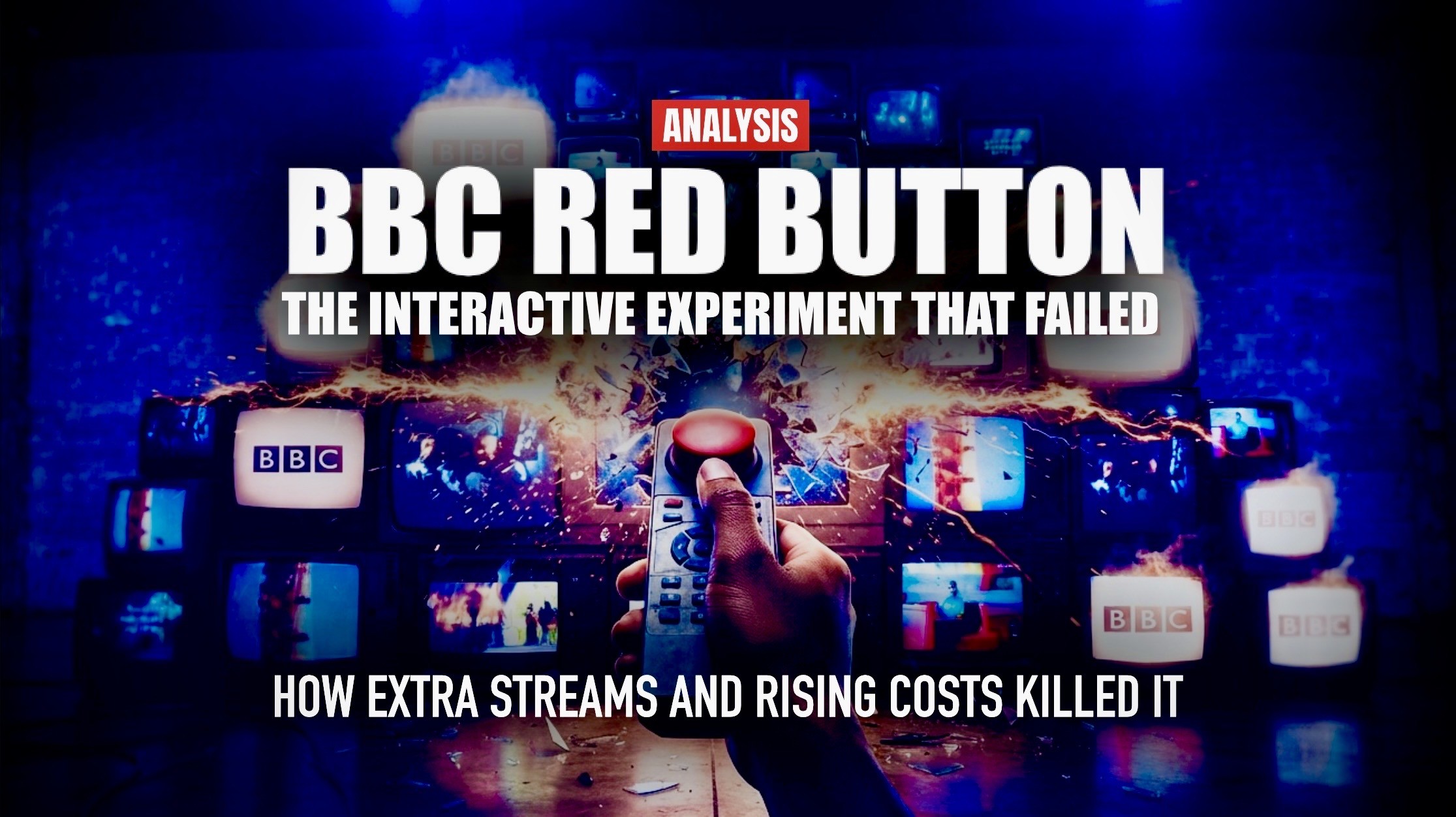
📺The BBC Red Button was one of British television’s boldest attempts to make viewing truly interactive. The Red Button itself was elegantly simple: a button on the remote control that gave viewers access to extra camera angles, additional information, quizzes, and interactive content during live broadcasts. It launched in the late 1990s and early 2000s as digital TV arrived, at a time when the internet was still mostly a computer experience and no one expected the living room television to behave like a web browser.
🚨The ambition was genuine. Broadcasters imagined viewers exercising real choice without leaving the sofa. Yet the practical problems quickly became clear. Creating interactive options meant producing multiple streams of content that most viewers would never select. Each extra stream required full technical specification checks quality control rights clearances and approval. In commercial settings this multiplied costs dramatically.
🚨Six streams could mean roughly six times the production and compliance work while the average viewer still experienced only one path and no real increase in total watching time. Audience take up for the alternate routes stayed low. The economics never stacked up.
💭As broadband improved and smartphones arrived the need for red button interactivity faded. People simply used better tools on other devices. The service was gradually scaled back and the dream of interactive television on the broadcast platform largely faded.
Netflix later tried to revive the concept with Black Mirror’s Bandersnatch and other interactive experiments that let viewers choose narrative paths. These projects showed audiences still enjoy agency when the storytelling is strong yet they remain rare because the creative overhead is still significant.
📺Interactive television failed because the technology production systems and viewer habits were not ready. Today streaming infrastructure AI assisted generation and far better devices make some of those old barriers lower. A comeback is possible but unlikely to be led by the BBC outside sports where multiple camera choice has always made practical sense and delivered clear value.
Was the original ambition wrong?.Or did the tools simply needed time to catch up?
🚀🚀🔥I think that when interactivity serves the story rather than forcing the story to serve the technology it could still have a valuable place in television’s future.
And that will be down to the next wave of story tellers.🔥🔥🚀🚀🚀
————————————
For anyone wanting tomorrows story now :
The £600 Million Ad Apocalypse : Why US tech is eating UK’s lunch
It’s live on my substack.
https://nicknmedia.substack.com
🚨The ambition was genuine. Broadcasters imagined viewers exercising real choice without leaving the sofa. Yet the practical problems quickly became clear. Creating interactive options meant producing multiple streams of content that most viewers would never select. Each extra stream required full technical specification checks quality control rights clearances and approval. In commercial settings this multiplied costs dramatically.
🚨Six streams could mean roughly six times the production and compliance work while the average viewer still experienced only one path and no real increase in total watching time. Audience take up for the alternate routes stayed low. The economics never stacked up.
💭As broadband improved and smartphones arrived the need for red button interactivity faded. People simply used better tools on other devices. The service was gradually scaled back and the dream of interactive television on the broadcast platform largely faded.
Netflix later tried to revive the concept with Black Mirror’s Bandersnatch and other interactive experiments that let viewers choose narrative paths. These projects showed audiences still enjoy agency when the storytelling is strong yet they remain rare because the creative overhead is still significant.
📺Interactive television failed because the technology production systems and viewer habits were not ready. Today streaming infrastructure AI assisted generation and far better devices make some of those old barriers lower. A comeback is possible but unlikely to be led by the BBC outside sports where multiple camera choice has always made practical sense and delivered clear value.
Was the original ambition wrong?.Or did the tools simply needed time to catch up?
🚀🚀🔥I think that when interactivity serves the story rather than forcing the story to serve the technology it could still have a valuable place in television’s future.
And that will be down to the next wave of story tellers.🔥🔥🚀🚀🚀
————————————
For anyone wanting tomorrows story now :
The £600 Million Ad Apocalypse : Why US tech is eating UK’s lunch
It’s live on my substack.
https://nicknmedia.substack.com