Faster Horses: Why Data Can’t Design Tomorrow’s Television🎯 Goood TV is commissioned from instinct, not just metrics. The best television balances what the numbers show with what people haven’t yet imagined.📺 Television commissioning wasn’t always about numbers. When the BBC launched in 1936, decisions came down to public service values and whoever happened to be in the room. Programmes were made in house, filtered through institutional judgment alone.📡 ITV arrived in... Read more
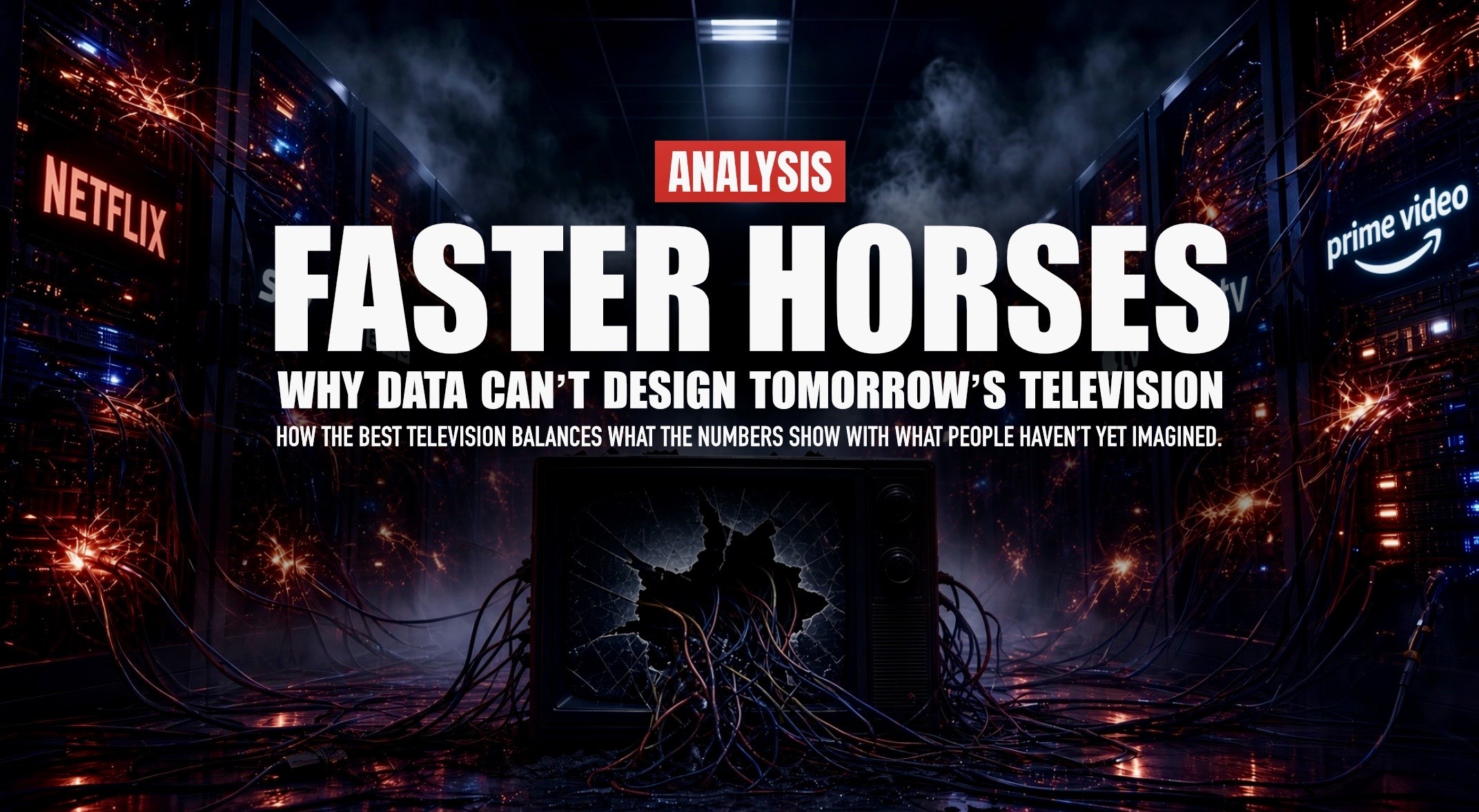
Faster Horses: Why Data Can’t Design Tomorrow’s Television
🎯 Goood TV is commissioned from instinct, not just metrics. The best television balances what the numbers show with what people haven’t yet imagined.
📺 Television commissioning wasn’t always about numbers. When the BBC launched in 1936, decisions came down to public service values and whoever happened to be in the room. Programmes were made in house, filtered through institutional judgment alone.
📡 ITV arrived in 1955 as something radically different: a system built on audience appetite. Commercial imperatives meant someone had to care what people actually watched. But the business remained closed. Broadcasters made most of their own content.
🔓 Channel 4 changed that in 1982. As a publisher broadcaster that commissioned almost everything from independents, it cracked open the system entirely. The legislation that followed forced the BBC and ITV to follow. Suddenly there were new voices, new ideas, new people.
📊 Today’s commissioners sit in a completely different information landscape. BARB panels once measured viewing through a small sample of meter equipped homes. Now streaming platforms capture everything. Completion rates, exact moments when people switch off, rewatches across devices, engagement patterns at granular resolution.
📈 The power of this data is real. Netflix renews or cancels within weeks by weighing completion rates against cost and retention impact. BBC iPlayer teams study minute by minute consumption patterns to understand what works. Analytics reduce waste, target resources where they belong, help programmes reach their audience.
⚠️ But here’s the thing. This data describes the past perfectly. It tells you what people responded to yesterday. It cannot tell you what will excite them tomorrow.
🐴 If you’d asked people what they wanted from technology when they still had horses, they would have asked for faster horses (Henry Ford). Data works the same way. It optimises the present. It cannot imagine the future.
✨ That’s where commissioning instinct comes in. The real role isn’t to follow the metrics. It’s to sense what audiences haven’t yet articulated. To take risks that numbers alone will never justify.
⚖️ The best path doesn’t choose between these forces. It uses data clarity as a foundation. Then it trusts human judgment to leap beyond what the graphs suggest. That combination, that balance, is what British television needs to stay inventive.
Please share thoughts💭💭💭💭
————————————
For anyone wanting tomorrows story now :
BBC RED BUTTON THE INTERACTIVE EXPERIMENT THAT FAILED
It’s live on my substack.
https://nicknmedia.substack.com
🎯 Goood TV is commissioned from instinct, not just metrics. The best television balances what the numbers show with what people haven’t yet imagined.
📺 Television commissioning wasn’t always about numbers. When the BBC launched in 1936, decisions came down to public service values and whoever happened to be in the room. Programmes were made in house, filtered through institutional judgment alone.
📡 ITV arrived in 1955 as something radically different: a system built on audience appetite. Commercial imperatives meant someone had to care what people actually watched. But the business remained closed. Broadcasters made most of their own content.
🔓 Channel 4 changed that in 1982. As a publisher broadcaster that commissioned almost everything from independents, it cracked open the system entirely. The legislation that followed forced the BBC and ITV to follow. Suddenly there were new voices, new ideas, new people.
📊 Today’s commissioners sit in a completely different information landscape. BARB panels once measured viewing through a small sample of meter equipped homes. Now streaming platforms capture everything. Completion rates, exact moments when people switch off, rewatches across devices, engagement patterns at granular resolution.
📈 The power of this data is real. Netflix renews or cancels within weeks by weighing completion rates against cost and retention impact. BBC iPlayer teams study minute by minute consumption patterns to understand what works. Analytics reduce waste, target resources where they belong, help programmes reach their audience.
⚠️ But here’s the thing. This data describes the past perfectly. It tells you what people responded to yesterday. It cannot tell you what will excite them tomorrow.
🐴 If you’d asked people what they wanted from technology when they still had horses, they would have asked for faster horses (Henry Ford). Data works the same way. It optimises the present. It cannot imagine the future.
✨ That’s where commissioning instinct comes in. The real role isn’t to follow the metrics. It’s to sense what audiences haven’t yet articulated. To take risks that numbers alone will never justify.
⚖️ The best path doesn’t choose between these forces. It uses data clarity as a foundation. Then it trusts human judgment to leap beyond what the graphs suggest. That combination, that balance, is what British television needs to stay inventive.
Please share thoughts💭💭💭💭
————————————
For anyone wanting tomorrows story now :
BBC RED BUTTON THE INTERACTIVE EXPERIMENT THAT FAILED
It’s live on my substack.
https://nicknmedia.substack.com