The British Broadcasters Billion Pound AI Goldmine!The Cleanest Training Data On Earth Is Locked In Their Vaults…But will they use it? Can they use it?📺 For four decades, British broadcasters recorded vastly more than they transmitted. Outtakes, unused takes, multicamera feeds, professional material that never aired, stored and forgotten.🎥 High quality video and audio are now the most contested resources in the AI industry. Companies need clean, professionally shot footage.... Read more
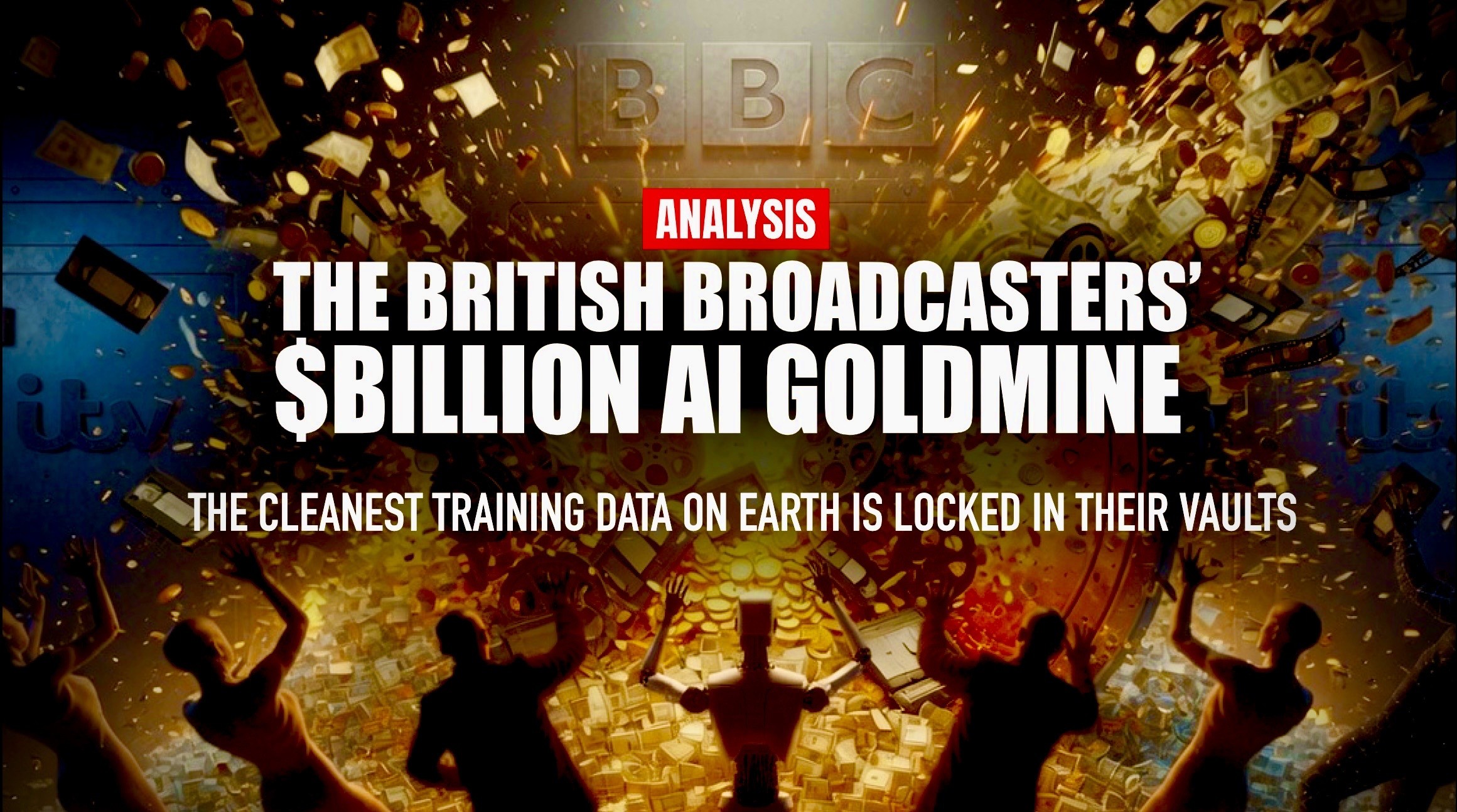
The British Broadcasters Billion Pound AI Goldmine!
The Cleanest Training Data On Earth Is Locked In Their Vaults…But will they use it? Can they use it?
📺 For four decades, British broadcasters recorded vastly more than they transmitted. Outtakes, unused takes, multicamera feeds, professional material that never aired, stored and forgotten.
🎥 High quality video and audio are now the most contested resources in the AI industry. Companies need clean, professionally shot footage. YouTube teaches models shaky compression. Broadcaster archives are something else entirely.
🇬🇧 British broadcasters are sitting on exactly what the AI industry needs.
💼 Inside these organisations, the conversation is already happening in closed meetings. Commercial teams see a revenue stream: licensed archive packages, specific training purposes, usage restrictions, audit rights. Money from assets currently generating zero. 💰
⚖️ But legal, editorial and talent teams are raising harder questions. Who owns performance rights in fortyyearold rushes? 1982 contracts say nothing about AI training, synthetic presenters, or deepfakes. What about crew whose technical work is embedded in every frame? How do you prevent licensed footage from being used to create convincing deepfakes of living presenters? What happens when licensed material appears, mutated, in commercial products the broadcaster never approved?
🏛️ And underneath sits something cultural: the archive is a public record, a trust, not inventory to monetise to the companies already destabilising the industry.
🔄 Yet the harder mirror image: if broadcasters lock the archives, AI training happens anyway. Just with worse data.
Companies train on YouTube scrapes, ethically questionable material. The technology advances. The broadcasters get nothing.
🏗️ The Infrastructure is Already Here
✅ Twinnin enables licensing of face and voice for AI training with consent, defined usage parameters, and payment built in.
✅ Troveo runs a marketplace where creators and media companies opt in and get paid, with rights documentation per asset.
✅ DepositPhotos offers rightscleared video and audio backed by legal safeguards.
💸 Shutterstock generated $138 million in data licensing revenue in 2024. News Corp signed a $250 million fiveyear deal with OpenAI for training rights. The market exists. The question is whether UK broadcasters build strategy around it.
🚀 Some organisations have begun pilots. Others are still mapping what they own. The technical challenge is substantial: decades of varied tape and formats require serious work.
📜 The rights challenge is harder. It demands conversations with unions, reconstruction of old contracts, frameworks for treating the archive as both cultural trust and modern asset.
⏳ The window doesn’t stay open long. Organisations that move carefully but decisively, mapping rights, clearing permissions, setting boundaries, will have agency. Those that wait risk the decision being forced.
💎 The goldmine is real. The fight over how to open it has only just begun.
https://nicknmedia.substack.com
The Cleanest Training Data On Earth Is Locked In Their Vaults…But will they use it? Can they use it?
📺 For four decades, British broadcasters recorded vastly more than they transmitted. Outtakes, unused takes, multicamera feeds, professional material that never aired, stored and forgotten.
🎥 High quality video and audio are now the most contested resources in the AI industry. Companies need clean, professionally shot footage. YouTube teaches models shaky compression. Broadcaster archives are something else entirely.
🇬🇧 British broadcasters are sitting on exactly what the AI industry needs.
💼 Inside these organisations, the conversation is already happening in closed meetings. Commercial teams see a revenue stream: licensed archive packages, specific training purposes, usage restrictions, audit rights. Money from assets currently generating zero. 💰
⚖️ But legal, editorial and talent teams are raising harder questions. Who owns performance rights in fortyyearold rushes? 1982 contracts say nothing about AI training, synthetic presenters, or deepfakes. What about crew whose technical work is embedded in every frame? How do you prevent licensed footage from being used to create convincing deepfakes of living presenters? What happens when licensed material appears, mutated, in commercial products the broadcaster never approved?
🏛️ And underneath sits something cultural: the archive is a public record, a trust, not inventory to monetise to the companies already destabilising the industry.
🔄 Yet the harder mirror image: if broadcasters lock the archives, AI training happens anyway. Just with worse data.
Companies train on YouTube scrapes, ethically questionable material. The technology advances. The broadcasters get nothing.
🏗️ The Infrastructure is Already Here
✅ Twinnin enables licensing of face and voice for AI training with consent, defined usage parameters, and payment built in.
✅ Troveo runs a marketplace where creators and media companies opt in and get paid, with rights documentation per asset.
✅ DepositPhotos offers rightscleared video and audio backed by legal safeguards.
💸 Shutterstock generated $138 million in data licensing revenue in 2024. News Corp signed a $250 million fiveyear deal with OpenAI for training rights. The market exists. The question is whether UK broadcasters build strategy around it.
🚀 Some organisations have begun pilots. Others are still mapping what they own. The technical challenge is substantial: decades of varied tape and formats require serious work.
📜 The rights challenge is harder. It demands conversations with unions, reconstruction of old contracts, frameworks for treating the archive as both cultural trust and modern asset.
⏳ The window doesn’t stay open long. Organisations that move carefully but decisively, mapping rights, clearing permissions, setting boundaries, will have agency. Those that wait risk the decision being forced.
💎 The goldmine is real. The fight over how to open it has only just begun.
https://nicknmedia.substack.com