BBC vs BBC STUDIOS 🎬ONE COSTS US £3.9 BILLION, THE OTHER MAKES £2.2 BILLION 💰The BBC began in 1922 as a public broadcaster. Commercial activity came later, BBC Enterprises in 1979, then BBC Worldwide. By 2018 production and distribution had merged into BBC Studios, to compete globally 🎯The key difference 🔑The licence fee is now £180 a year, bringing in £3.9 billion. Total BBC group income including commercial revenue is £5.9 billion. BBC Studios posted revenue £2.2... Read more
BBC vs BBC STUDIOS 🎬
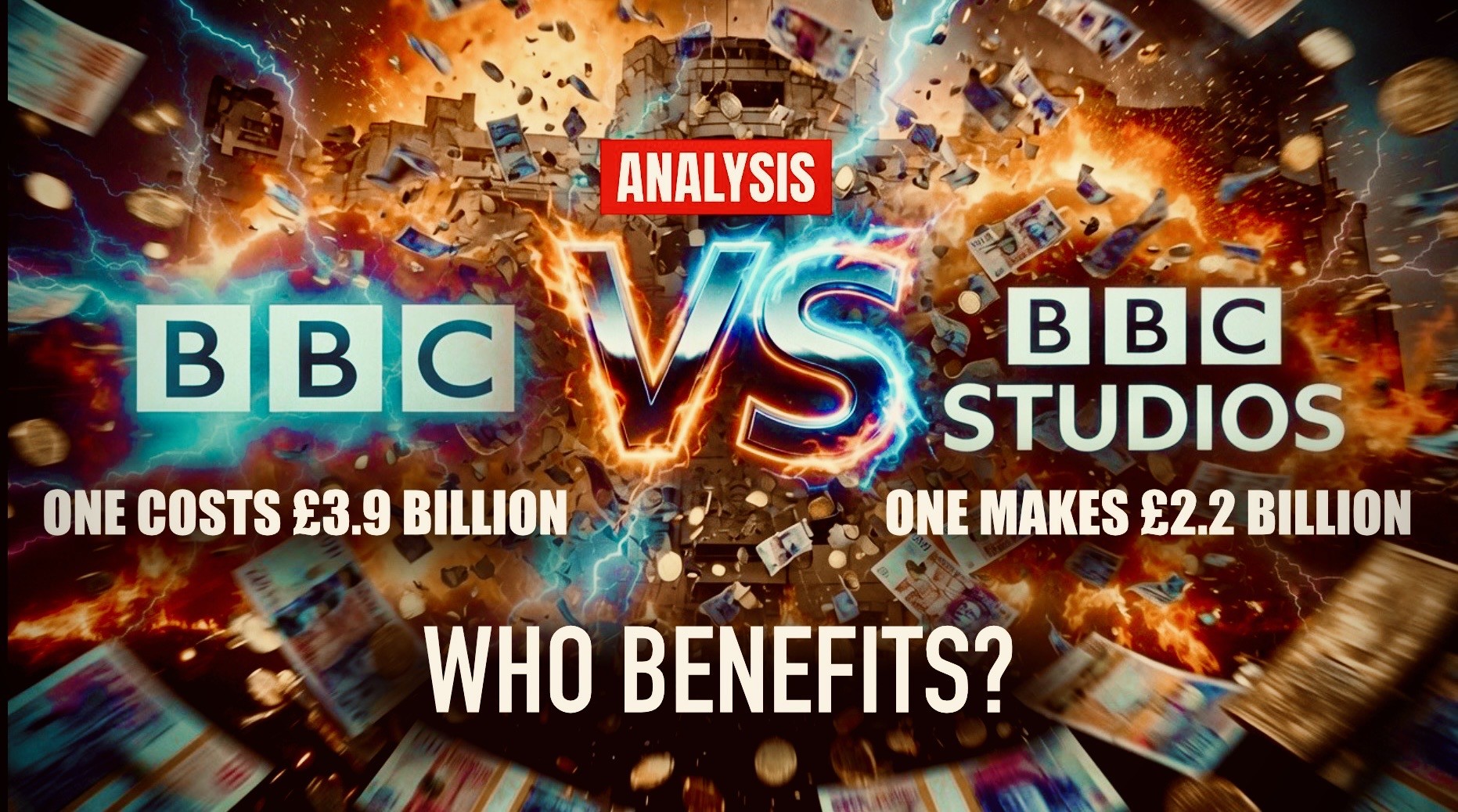
ONE COSTS US £3.9 BILLION, THE OTHER MAKES £2.2 BILLION 💰
The BBC began in 1922 as a public broadcaster. Commercial activity came later, BBC Enterprises in 1979, then BBC Worldwide. By 2018 production and distribution had merged into BBC Studios, to compete globally 🎯
The key difference 🔑
The licence fee is now £180 a year, bringing in £3.9 billion. Total BBC group income including commercial revenue is £5.9 billion. BBC Studios posted revenue £2.2 billion, £267 million (up 17%), profit after tax £71 million (up 9%) 📈 None of it comes from the licence fee.
Where does the profit go? 💷
BBC Studios returned £377 million to the BBC last year, £197 million as dividend and £154 million into new programmes. Working toward £1.5 billion by 2027/28, roughly £1 billion in, though its Public Accounts Committee flagged the BBC hasn’t clearly reported progress against that target 🧐
Exclusive rights 🔒
The BBC owns the IP behind thing like Doctor Who, Top Gear and Bluey, and licenses it to BBC Studios, first access to exploit it worldwide, built on relationships licence fee payers funded.
The bit that damages the brand 😤
Open a paid Netflix subscription and find a shelf of BBC content there too. Hard not to feel charged twice, licence fee plus subscription, for shows your fee already covered. Not just perception, it’s a trust problem, and I doubt I’m the only one who’s noticed.
Now the genuinely absurd bit 🤯
The BBC scrapped this year’s Christmas special and put Doctor Who out to competitive tender, open to independent producers. BBC Studios’ own CEO has confirmed it’s bidding too, “in it to win it.” A BBC subsidiary competing for a show its own parent owns and will pick the winner.
Worth asking out loud 🤔
Can a tender be fair when a bidder shares a building, brand and boss with the judge? Is BBC Studios earning its wins, or leaning on the name? Transparency on judging should be easy to give.
The bottom line 📊
Does BBC Studios reduce the licence fee?
Genuinely yes. £377 million works out to roughly £16 per household. Without it, £180 would likely be nearer £196, nearly 9% higher. That’s the case for the model.
The case for more is just as real. £377 million is only 6% of group income, and licensing our own shows back to us on Netflix stings when the BBC can’t show progress against a £1.5 billion target either.
Both things are true 💡 BBC Studios genuinely keeps the fee lower than it would be. It also owes payers, whose trust built the brand, full transparency, and more thought about where that brand shows up.
I remain hopeful for the BBC ❤️
It still reaches the vast majority of the country monthly and carries a unique public purpose.
Sharper transparency alongside commercial ambition isn’t a threat to that mission, it’s what protects it.
The next chapter can be brighter 🌟
ONE COSTS US £3.9 BILLION, THE OTHER MAKES £2.2 BILLION 💰
The BBC began in 1922 as a public broadcaster. Commercial activity came later, BBC Enterprises in 1979, then BBC Worldwide. By 2018 production and distribution had merged into BBC Studios, to compete globally 🎯
The key difference 🔑
The licence fee is now £180 a year, bringing in £3.9 billion. Total BBC group income including commercial revenue is £5.9 billion. BBC Studios posted revenue £2.2 billion, £267 million (up 17%), profit after tax £71 million (up 9%) 📈 None of it comes from the licence fee.
Where does the profit go? 💷
BBC Studios returned £377 million to the BBC last year, £197 million as dividend and £154 million into new programmes. Working toward £1.5 billion by 2027/28, roughly £1 billion in, though its Public Accounts Committee flagged the BBC hasn’t clearly reported progress against that target 🧐
Exclusive rights 🔒
The BBC owns the IP behind thing like Doctor Who, Top Gear and Bluey, and licenses it to BBC Studios, first access to exploit it worldwide, built on relationships licence fee payers funded.
The bit that damages the brand 😤
Open a paid Netflix subscription and find a shelf of BBC content there too. Hard not to feel charged twice, licence fee plus subscription, for shows your fee already covered. Not just perception, it’s a trust problem, and I doubt I’m the only one who’s noticed.
Now the genuinely absurd bit 🤯
The BBC scrapped this year’s Christmas special and put Doctor Who out to competitive tender, open to independent producers. BBC Studios’ own CEO has confirmed it’s bidding too, “in it to win it.” A BBC subsidiary competing for a show its own parent owns and will pick the winner.
Worth asking out loud 🤔
Can a tender be fair when a bidder shares a building, brand and boss with the judge? Is BBC Studios earning its wins, or leaning on the name? Transparency on judging should be easy to give.
The bottom line 📊
Does BBC Studios reduce the licence fee?
Genuinely yes. £377 million works out to roughly £16 per household. Without it, £180 would likely be nearer £196, nearly 9% higher. That’s the case for the model.
The case for more is just as real. £377 million is only 6% of group income, and licensing our own shows back to us on Netflix stings when the BBC can’t show progress against a £1.5 billion target either.
Both things are true 💡 BBC Studios genuinely keeps the fee lower than it would be. It also owes payers, whose trust built the brand, full transparency, and more thought about where that brand shows up.
I remain hopeful for the BBC ❤️
It still reaches the vast majority of the country monthly and carries a unique public purpose.
Sharper transparency alongside commercial ambition isn’t a threat to that mission, it’s what protects it.
The next chapter can be brighter 🌟