Deal or No Deal for Auntie: When Noel Edmonds Tried to Buy the BBC 📺💼The BBC funding model is under scrutiny once again, with debates over the licence fee’s value for money and relevance in a streaming age dominating headlines. 🔍One intriguing chapter came in 2014 when former BBC presenter Noel Edmonds declared he had a plan and financial backers to buy the entire corporation. 😲Edmonds argued the BBC was “sleepwalking to disaster” and a “terminally ill patient.” 🏥... Read more
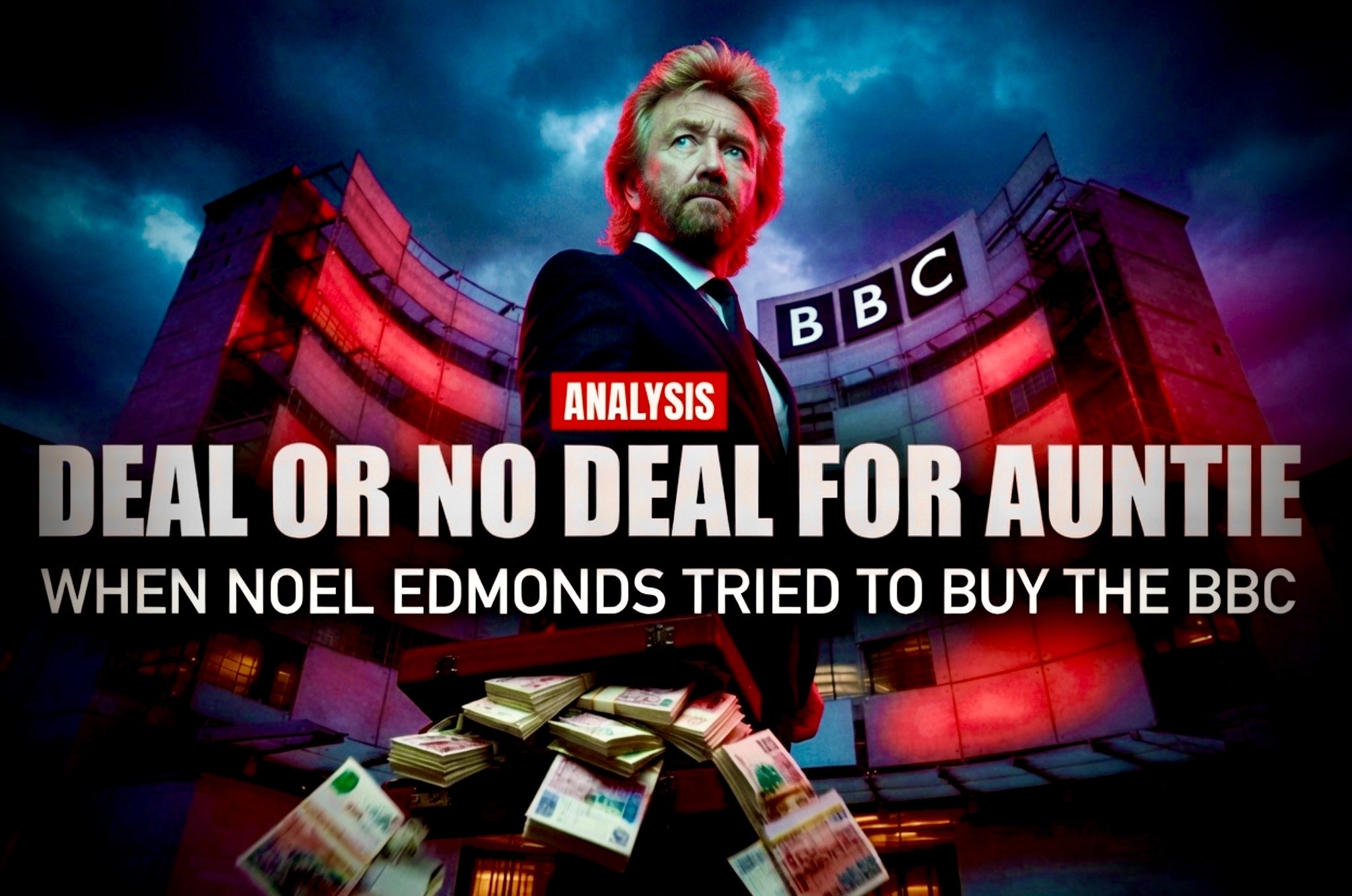
Deal or No Deal for Auntie: When Noel Edmonds Tried to Buy the BBC 📺💼
The BBC funding model is under scrutiny once again, with debates over the licence fee’s value for money and relevance in a streaming age dominating headlines. 🔍
One intriguing chapter came in 2014 when former BBC presenter Noel Edmonds declared he had a plan and financial backers to buy the entire corporation. 😲
Edmonds argued the BBC was “sleepwalking to disaster” and a “terminally ill patient.” 🏥
In a Sunday Times article and Newsnight appearance with Jeremy Paxman he revealed Project Reith … a secret consortium of wealthy likeminded (some international) investors that had been meeting for about 18 months. 🤝
The goal: take the BBC private, ditch the licence fee, fund it through advertising and sponsorship, keep a publicservice ethos, and make it profitable and fit for the internet era. 💡
He never named a price. 💰
An expert put BBC Worldwide alone at around £2 billion; older full privatisation estimates ranged £5 to 7 billion. Profit would have required radical change: fewer channels and repeats, sharper focus on original highquality content, reduced bureaucracy, an end to expansionism, and commercial revenue that would compete with ITV and Channel 4. 📉📈
Why it could have worked: Private cash and commercial discipline might have forced efficiency, cut waste and accelerated digital innovation (as TF1 did after its French sale). Advertising and global content sales could have replaced the licence fee while still delivering popular shows. 🚀
Why it probably wouldn’t: The BBC sits under Royal Charter, so it cannot simply be bought. Politicians of every stripe rejected the idea; publicservice duties clash with pure profit motives. An adfunded BBC would battle commercial rivals and risk losing the independence that makes it unique. ❌
Was it feasible?
Legally and politically, no. Government sources quickly said it was not for sale. Edmonds refused to name investors or detail financial models. The idea met widespread bemusement and scepticism. Nothing came of it. The Charter was renewed, the licence fee continued (with adjustments) and Edmonds moved on. 🏛️
Similar moves elsewhere: France privatised TF1 in 1987 with commercial success. Several European countries liberalised broadcasting in the 1980s to 90s. Fuller privatisation attempts (e.g. Denmark’s TV2) often stalled. Full takeovers of major publicservice institutions remain rare because of their cultural and democratic role. 🛡️
Yet the episode still offers optimism. 🌟
Edmonds forced a public conversation about sustainability, efficiency and adaptation. Today the BBC continues producing while experimenting with digital platforms and new funding ideas. The debate continues and that itself is healthy. 👍
What do you think? Radical, justified, or just plain nuts?
Drop your thoughts 👇
The BBC funding model is under scrutiny once again, with debates over the licence fee’s value for money and relevance in a streaming age dominating headlines. 🔍
One intriguing chapter came in 2014 when former BBC presenter Noel Edmonds declared he had a plan and financial backers to buy the entire corporation. 😲
Edmonds argued the BBC was “sleepwalking to disaster” and a “terminally ill patient.” 🏥
In a Sunday Times article and Newsnight appearance with Jeremy Paxman he revealed Project Reith … a secret consortium of wealthy likeminded (some international) investors that had been meeting for about 18 months. 🤝
The goal: take the BBC private, ditch the licence fee, fund it through advertising and sponsorship, keep a publicservice ethos, and make it profitable and fit for the internet era. 💡
He never named a price. 💰
An expert put BBC Worldwide alone at around £2 billion; older full privatisation estimates ranged £5 to 7 billion. Profit would have required radical change: fewer channels and repeats, sharper focus on original highquality content, reduced bureaucracy, an end to expansionism, and commercial revenue that would compete with ITV and Channel 4. 📉📈
Why it could have worked: Private cash and commercial discipline might have forced efficiency, cut waste and accelerated digital innovation (as TF1 did after its French sale). Advertising and global content sales could have replaced the licence fee while still delivering popular shows. 🚀
Why it probably wouldn’t: The BBC sits under Royal Charter, so it cannot simply be bought. Politicians of every stripe rejected the idea; publicservice duties clash with pure profit motives. An adfunded BBC would battle commercial rivals and risk losing the independence that makes it unique. ❌
Was it feasible?
Legally and politically, no. Government sources quickly said it was not for sale. Edmonds refused to name investors or detail financial models. The idea met widespread bemusement and scepticism. Nothing came of it. The Charter was renewed, the licence fee continued (with adjustments) and Edmonds moved on. 🏛️
Similar moves elsewhere: France privatised TF1 in 1987 with commercial success. Several European countries liberalised broadcasting in the 1980s to 90s. Fuller privatisation attempts (e.g. Denmark’s TV2) often stalled. Full takeovers of major publicservice institutions remain rare because of their cultural and democratic role. 🛡️
Yet the episode still offers optimism. 🌟
Edmonds forced a public conversation about sustainability, efficiency and adaptation. Today the BBC continues producing while experimenting with digital platforms and new funding ideas. The debate continues and that itself is healthy. 👍
What do you think? Radical, justified, or just plain nuts?
Drop your thoughts 👇