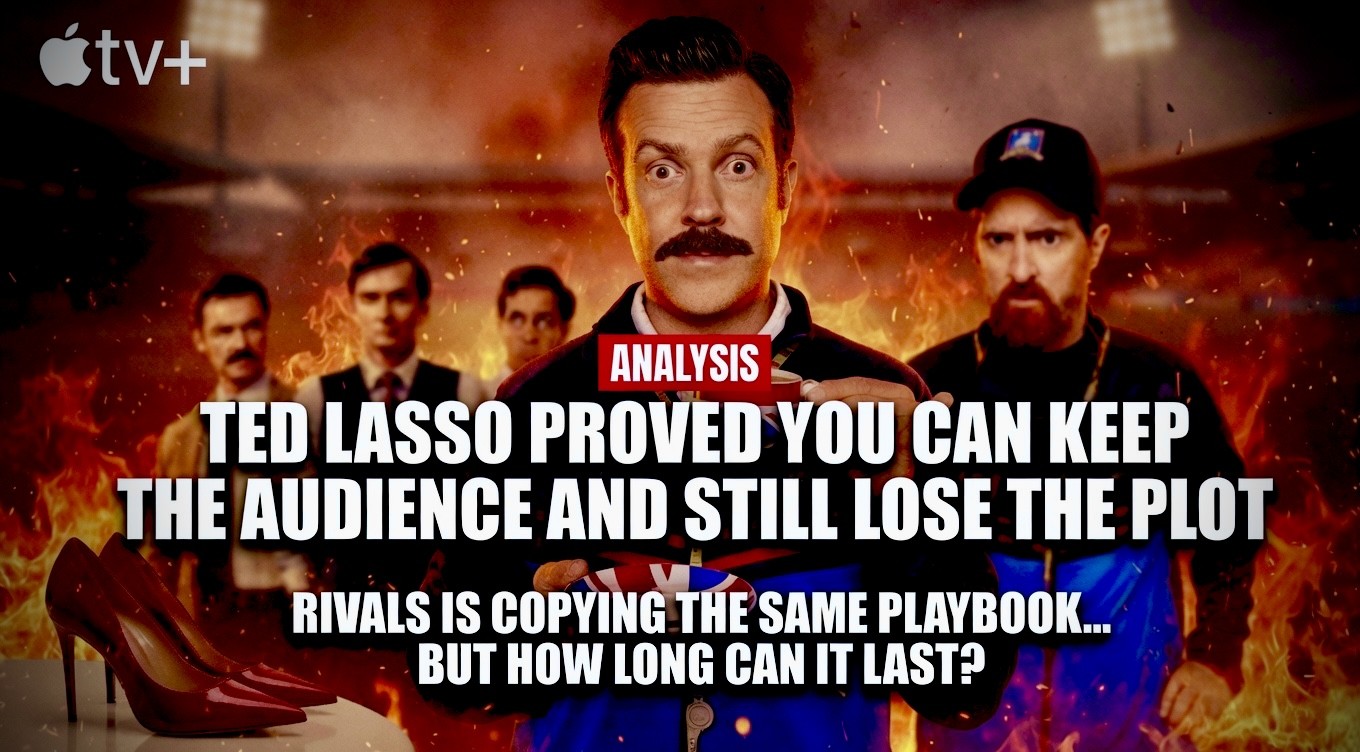
Ted Lasso Proved You Can Keep the Audience and Still Lose the Plot… for now. But can they get the story back on track? ⚽📺As we head toward the August 5 premiere of Ted Lasso Season 4, anticipation mixes with skepticism. The signature formula still works. 👀Season 1 was a masterclass in tight, high stakes storytelling. 🔥
It had an airtight backbone: a bitter ex wife hires a guaranteed failure to sabotage a football club out of spite. Stakes were binary… survival or ruin. 💥... Read more
Ted Lasso Proved You Can Keep the Audience and Still Lose the Plot… for now. But can they get the story back on track? ⚽📺
As we head toward the August 5 premiere of Ted Lasso Season 4, anticipation mixes with skepticism. The signature formula still works. 👀
Season 1 was a masterclass in tight, high stakes storytelling. 🔥
It had an airtight backbone: a bitter ex wife hires a guaranteed failure to sabotage a football club out of spite. Stakes were binary… survival or ruin. 💥
Once the revenge plot resolved, the writers stepped away from their built in safety net: football itself. A league table offers automatic tension through promotion and relegation.
Reducing matches to 30 second montages was a gamble. Even non sports fans wanted more of the pitch for the drama of the crucible. The show bet deeper character work could carry it instead. 🎲
Season 3 leaned hard into self indulgent narrative drift.
Richmond’s struggles showed what happens when you loosen the central narrative spine. Yet the emotional, character first approach still kept audiences coming back. The formula works. It’s risky as hell and the creators know it. ⚖️
The bet paid off in cultural staying power, but Season 3 exposed the risk. Plot stalled into exhausting 75 minute therapy sessions and forced subplots:
• The botched Nate redemption: high stakes betrayal resolved largely off screen, softened by sudden violin talent and a romance with Jade. 🎻
• Keeley & Jack: a sudden romance that introduced toxic imbalance and stalled Keeley’s growth. 💔
• Rebecca’s detours: reducing a fierce figure to waiting on a psychic or stranded on an Amsterdam houseboat. 🛥️
The Season 2 episode “Beard After Hours”… originally filler… set the precedent for self indulgent side quests. Viewers stayed out of habit, but the cultural conversation cooled. 📉
You cannot sustain a franchise by swapping structural stakes for soap opera drift. ⚠️
Now look at Rivals. Season 1 delivered a sharp story of ambition and power games in 1980s television. The tight spine held everything together. 📺✨
Season 2 is already heading down the same path: disciplined storytelling abandoned for non essential character plots and emotional filler that dilutes momentum.
Where Ted Lasso sidelined the football, Rivals risks sidelining the ruthless warfare that made it crackle. ⚡
Season 4 of Ted Lasso has a new focus and story spine. It’s an open acknowledgment of the tightrope the creators have walked all along.
Heart first storytelling over pure structural drama still works. It just carries real risk every time. Rivals Season 2 is proving the same lesson in real time. 🚶♂️
With Rivals season 2 Part 2 due in November and Ted Lasso season 4 next month… it will be interesting to see what meaningful changes, if any, have been made. 🗓️
As we head toward the August 5 premiere of Ted Lasso Season 4, anticipation mixes with skepticism. The signature formula still works. 👀
Season 1 was a masterclass in tight, high stakes storytelling. 🔥
It had an airtight backbone: a bitter ex wife hires a guaranteed failure to sabotage a football club out of spite. Stakes were binary… survival or ruin. 💥
Once the revenge plot resolved, the writers stepped away from their built in safety net: football itself. A league table offers automatic tension through promotion and relegation.
Reducing matches to 30 second montages was a gamble. Even non sports fans wanted more of the pitch for the drama of the crucible. The show bet deeper character work could carry it instead. 🎲
Season 3 leaned hard into self indulgent narrative drift.
Richmond’s struggles showed what happens when you loosen the central narrative spine. Yet the emotional, character first approach still kept audiences coming back. The formula works. It’s risky as hell and the creators know it. ⚖️
The bet paid off in cultural staying power, but Season 3 exposed the risk. Plot stalled into exhausting 75 minute therapy sessions and forced subplots:
• The botched Nate redemption: high stakes betrayal resolved largely off screen, softened by sudden violin talent and a romance with Jade. 🎻
• Keeley & Jack: a sudden romance that introduced toxic imbalance and stalled Keeley’s growth. 💔
• Rebecca’s detours: reducing a fierce figure to waiting on a psychic or stranded on an Amsterdam houseboat. 🛥️
The Season 2 episode “Beard After Hours”… originally filler… set the precedent for self indulgent side quests. Viewers stayed out of habit, but the cultural conversation cooled. 📉
You cannot sustain a franchise by swapping structural stakes for soap opera drift. ⚠️
Now look at Rivals. Season 1 delivered a sharp story of ambition and power games in 1980s television. The tight spine held everything together. 📺✨
Season 2 is already heading down the same path: disciplined storytelling abandoned for non essential character plots and emotional filler that dilutes momentum.
Where Ted Lasso sidelined the football, Rivals risks sidelining the ruthless warfare that made it crackle. ⚡
Season 4 of Ted Lasso has a new focus and story spine. It’s an open acknowledgment of the tightrope the creators have walked all along.
Heart first storytelling over pure structural drama still works. It just carries real risk every time. Rivals Season 2 is proving the same lesson in real time. 🚶♂️
With Rivals season 2 Part 2 due in November and Ted Lasso season 4 next month… it will be interesting to see what meaningful changes, if any, have been made. 🗓️