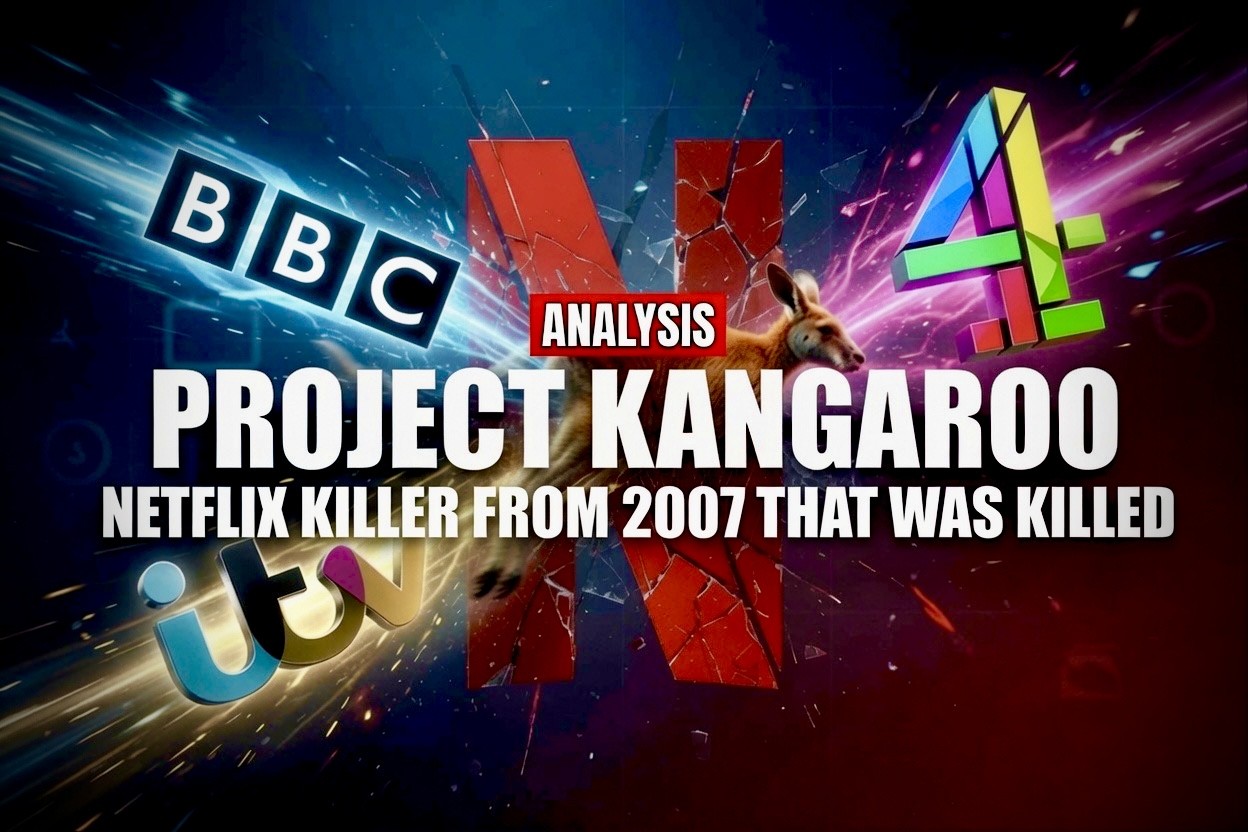
🦘🦘 Project Kangaroo: The British Streaming Vision Ahead of Its TimeIt could have beaten Netflix. And you probably never heard of it.If your TV feels split across too many apps, this would have fixed it 20 years ago.📅 In November 2007, BBC Worldwide, ITV and Channel 4 announced Project Kangaroo, a joint video on demand platform.Born from talks between BBC and ITV executives, it aimed to create a single digital home for the best of British television, aggregating content from the... Read more
🦘🦘 Project Kangaroo: The British Streaming Vision Ahead of Its Time
It could have beaten Netflix. And you probably never heard of it.
If your TV feels split across too many apps, this would have fixed it 20 years ago.
📅 In November 2007, BBC Worldwide, ITV and Channel 4 announced Project Kangaroo, a joint video on demand platform.
Born from talks between BBC and ITV executives, it aimed to create a single digital home for the best of British television, aggregating content from the major public service broadcasters into one user friendly service.
📺 Designed as a commercial counterpart to the young BBC iPlayer, Kangaroo would offer thousands of hours: free, ad supported catch up plus paid access to archives and premium titles.
The radical goal for the era: one destination instead of hopping between sites. It would generate new revenues and strengthen British content.
Ashley Highfield, who oversaw iPlayer, was appointed CEO in 2008. Launch was expected that year.
❌ It never happened.
In 2008 the Office of Fair Trading referred the venture to the Competition Commission. Rivals including Sky and Virgin Media argued the partners controlled most valuable UK programming and would dominate the emerging VOD market.
In February 2009 the Commission blocked it, ruling it posed “too much of a threat to competition” with no workable remedies.
The partners said British consumers were the real losers. And it’s hard to disagree.
🔄 Technology and assets were sold to Arqiva for around £8 million and relaunched in 2010 as SeeSaw. Without the original partners’ full depth, it closed in October 2011.
💭 What could Kangaroo have been?
A scaled British platform years before Netflix became a UK force, combining public service richness with commercial muscle, retaining viewing and ad value at home.
Many later called the decision one of the costliest regulatory missteps in modern British media.
✅ Today’s landscape proves the insight. BritBox showed demand for curated British content under one roof. ITVX has become a major free and premium destination. Sky’s planned acquisition of ITV’s Media & Entertainment business (including ITVX) aims to build a stronger domestic champion against global streamers. Collaboration is now seen as essential.
🚀 There is reason for optimism. The industry has learned. Partnerships once seen as radical are now pragmatic. Investment in distinctive British storytelling continues, and viewers still value quality home grown drama, comedy and factual programmes.
The spirit of Project Kangaroo, collaboration for audiences and British creativity, finally has the chance to deliver.
The question is.. Has this come too late to compete on a global scale. 🦘✨
Does anyone have any thoughts one this?
It could have beaten Netflix. And you probably never heard of it.
If your TV feels split across too many apps, this would have fixed it 20 years ago.
📅 In November 2007, BBC Worldwide, ITV and Channel 4 announced Project Kangaroo, a joint video on demand platform.
Born from talks between BBC and ITV executives, it aimed to create a single digital home for the best of British television, aggregating content from the major public service broadcasters into one user friendly service.
📺 Designed as a commercial counterpart to the young BBC iPlayer, Kangaroo would offer thousands of hours: free, ad supported catch up plus paid access to archives and premium titles.
The radical goal for the era: one destination instead of hopping between sites. It would generate new revenues and strengthen British content.
Ashley Highfield, who oversaw iPlayer, was appointed CEO in 2008. Launch was expected that year.
❌ It never happened.
In 2008 the Office of Fair Trading referred the venture to the Competition Commission. Rivals including Sky and Virgin Media argued the partners controlled most valuable UK programming and would dominate the emerging VOD market.
In February 2009 the Commission blocked it, ruling it posed “too much of a threat to competition” with no workable remedies.
The partners said British consumers were the real losers. And it’s hard to disagree.
🔄 Technology and assets were sold to Arqiva for around £8 million and relaunched in 2010 as SeeSaw. Without the original partners’ full depth, it closed in October 2011.
💭 What could Kangaroo have been?
A scaled British platform years before Netflix became a UK force, combining public service richness with commercial muscle, retaining viewing and ad value at home.
Many later called the decision one of the costliest regulatory missteps in modern British media.
✅ Today’s landscape proves the insight. BritBox showed demand for curated British content under one roof. ITVX has become a major free and premium destination. Sky’s planned acquisition of ITV’s Media & Entertainment business (including ITVX) aims to build a stronger domestic champion against global streamers. Collaboration is now seen as essential.
🚀 There is reason for optimism. The industry has learned. Partnerships once seen as radical are now pragmatic. Investment in distinctive British storytelling continues, and viewers still value quality home grown drama, comedy and factual programmes.
The spirit of Project Kangaroo, collaboration for audiences and British creativity, finally has the chance to deliver.
The question is.. Has this come too late to compete on a global scale. 🦘✨
Does anyone have any thoughts one this?