Can you own the copyright to GenAI video content?It’s a question that comes up a lot.And when there’s no recognisable intellectual property in the output, the answer may surprise some people.In the UK, it is certainly possible to own the rights. There’s even a specific provision for it under the Designs and Patents Act 1988.For “computer generated works” where there is no human author, the author is considered to be the person who made the “arrangements necessary for the... Read more
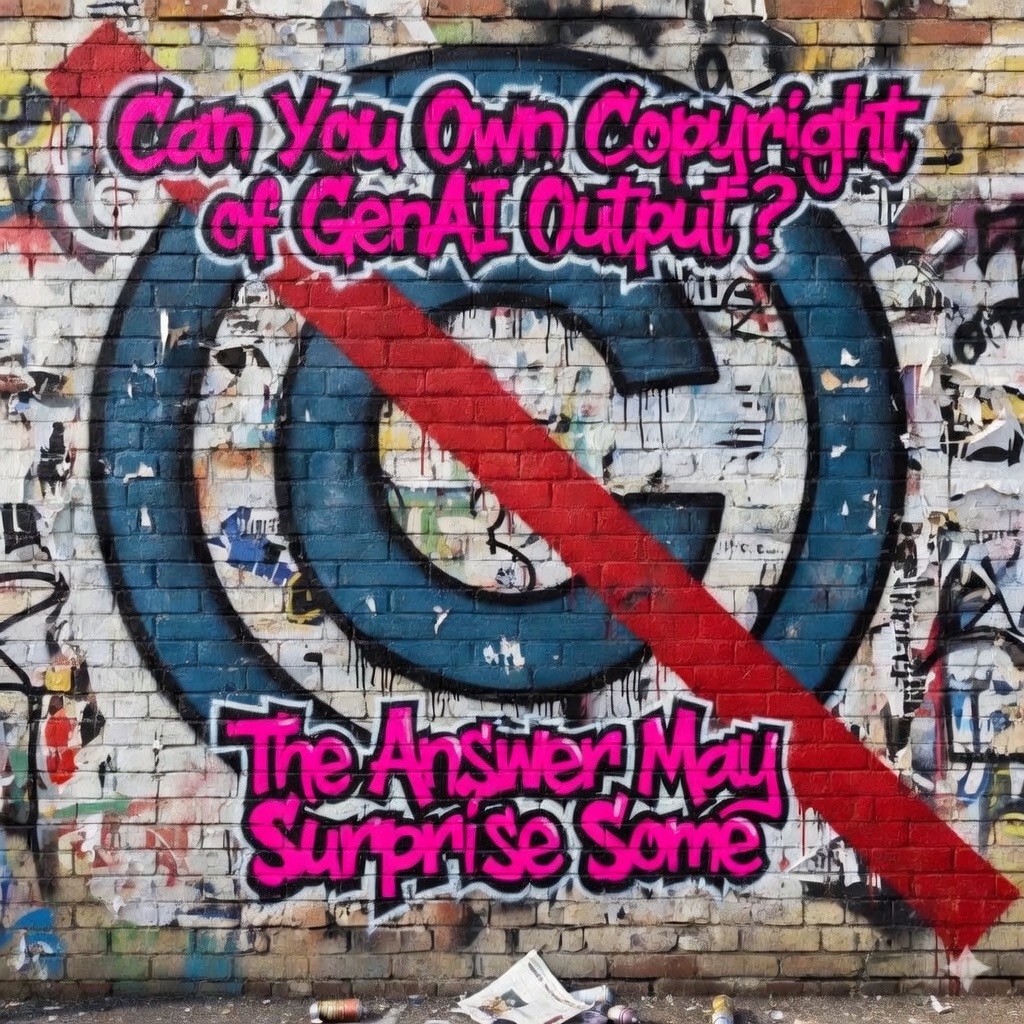
Can you own the copyright to GenAI video content?
It’s a question that comes up a lot.
And when there’s no recognisable intellectual property in the output, the answer may surprise some people.
In the UK, it is certainly possible to own the rights. There’s even a specific provision for it under the Designs and Patents Act 1988.
For “computer generated works” where there is no human author, the author is considered to be the person who made the “arrangements necessary for the creation of the work.”
However, the copyright term is different. Protection lasts 50 years from creation, rather than the standard 70 years after the author’s death.
Elsewhere, the rules vary.
Chinese courts have ruled that AI generated images can be protected by copyright if they reflect the user’s creative choices, while the EU generally takes the view that a human must be involved in the creative process.
In the US, purely AI generated content cannot be copyrighted, but material with significant human input might be.
And the word significant could prove hard to define.
Many AI tools say in their terms that they assign their rights in the output to the user. However, with tools like Grok it’s more of a licence to use the content, as the company also retains the right to use it. In practice, that can make the output feel almost like it’s in the public domain.
James Cameron famously included disclaimers on the latest Avatar film stating that no AI was used.
Yet he has also said he sees AI as a potential tool to “double the speed” of visual effects workflows in the future.
And you can be sure he believes he and the studios own all the material used in that billion dollar franchise.
Of course, if your output clearly includes someone else’s intellectual property… say a recognisable Star Wars or Pixar character then you can’t claim ownership of that.
But for original work, with at least some creative input, it is possible to own the rights in many countries.
And certainly in the UK.
It’s a question that comes up a lot.
And when there’s no recognisable intellectual property in the output, the answer may surprise some people.
In the UK, it is certainly possible to own the rights. There’s even a specific provision for it under the Designs and Patents Act 1988.
For “computer generated works” where there is no human author, the author is considered to be the person who made the “arrangements necessary for the creation of the work.”
However, the copyright term is different. Protection lasts 50 years from creation, rather than the standard 70 years after the author’s death.
Elsewhere, the rules vary.
Chinese courts have ruled that AI generated images can be protected by copyright if they reflect the user’s creative choices, while the EU generally takes the view that a human must be involved in the creative process.
In the US, purely AI generated content cannot be copyrighted, but material with significant human input might be.
And the word significant could prove hard to define.
Many AI tools say in their terms that they assign their rights in the output to the user. However, with tools like Grok it’s more of a licence to use the content, as the company also retains the right to use it. In practice, that can make the output feel almost like it’s in the public domain.
James Cameron famously included disclaimers on the latest Avatar film stating that no AI was used.
Yet he has also said he sees AI as a potential tool to “double the speed” of visual effects workflows in the future.
And you can be sure he believes he and the studios own all the material used in that billion dollar franchise.
Of course, if your output clearly includes someone else’s intellectual property… say a recognisable Star Wars or Pixar character then you can’t claim ownership of that.
But for original work, with at least some creative input, it is possible to own the rights in many countries.
And certainly in the UK.