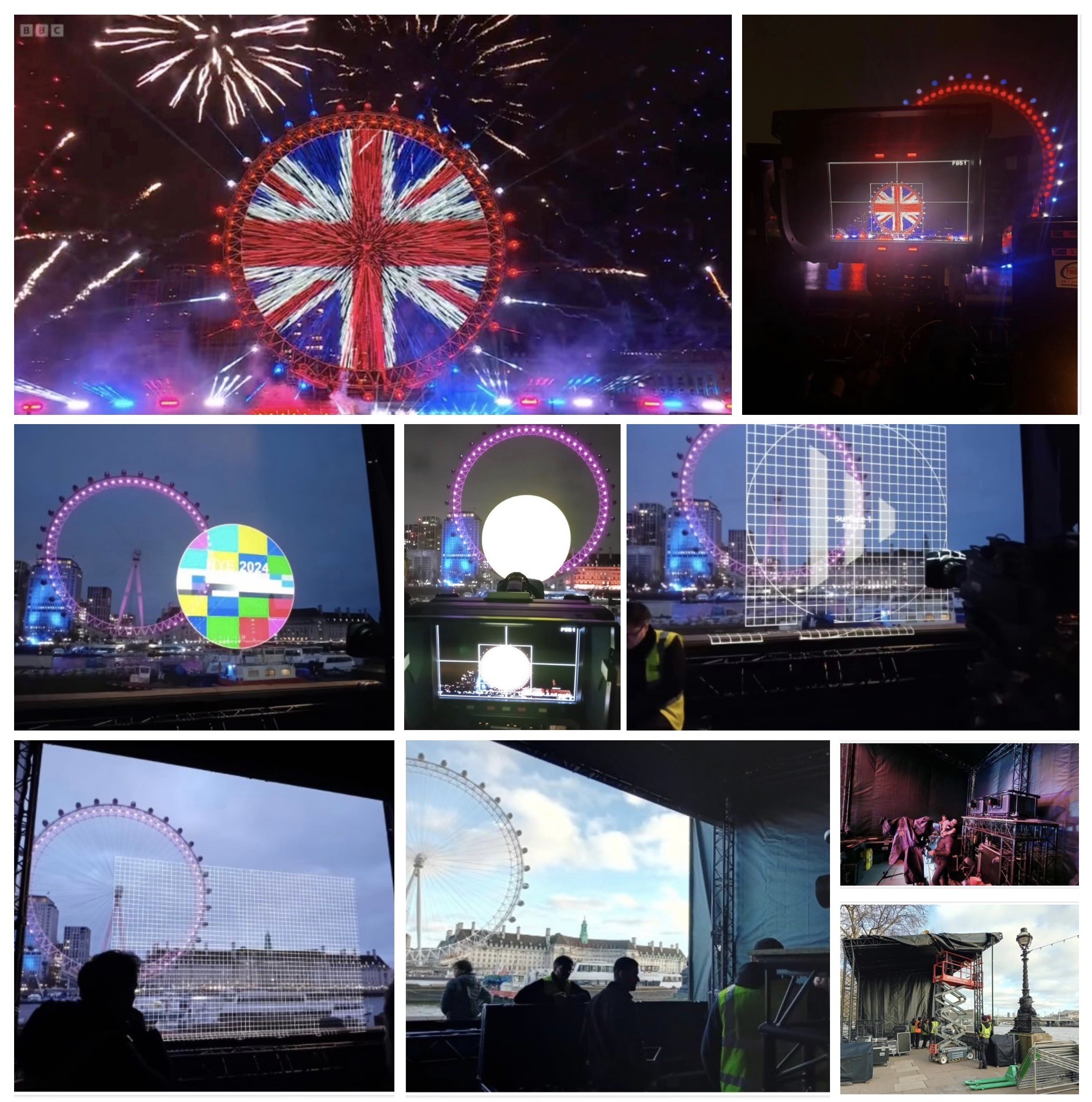
If you watched the London New Year’s Eve fireworks on TV and wondered about the images appearing on the London Eye, you may have realised something: they weren’t visible to people watching in person.I assumed it was just CGI. And it is… sort of. The images are shot through a gauze using forced perspective, then projected onto it. The effect is real time and done in camera.But only TV viewers ever see it.Which raises some interesting questions about broadcasting live events like... Read more
If you watched the London New Year’s Eve fireworks on TV and wondered about the images appearing on the London Eye, you may have realised something: they weren’t visible to people watching in person.
I assumed it was just CGI. And it is… sort of. The images are shot through a gauze using forced perspective, then projected onto it. The effect is real time and done in camera.
But only TV viewers ever see it.
Which raises some interesting questions about broadcasting live events like this. How much trickery is acceptable? Does the technique even matter to an audience that isn’t getting an authentic view of the fireworks?
Where should the line be drawn? For example, I think many people would see adding virtual fireworks or drone shows as a step too far.
Personally, I don’t think it adds enough to justify its use. As a purist, I’d rather see only what people on the ground can actually see …but that’s just my opinion.
That said, this projection technique has been used for several years now, so it’s probably here to stay. At least for the London New Year’s Eve fireworks.
I assumed it was just CGI. And it is… sort of. The images are shot through a gauze using forced perspective, then projected onto it. The effect is real time and done in camera.
But only TV viewers ever see it.
Which raises some interesting questions about broadcasting live events like this. How much trickery is acceptable? Does the technique even matter to an audience that isn’t getting an authentic view of the fireworks?
Where should the line be drawn? For example, I think many people would see adding virtual fireworks or drone shows as a step too far.
Personally, I don’t think it adds enough to justify its use. As a purist, I’d rather see only what people on the ground can actually see …but that’s just my opinion.
That said, this projection technique has been used for several years now, so it’s probably here to stay. At least for the London New Year’s Eve fireworks.