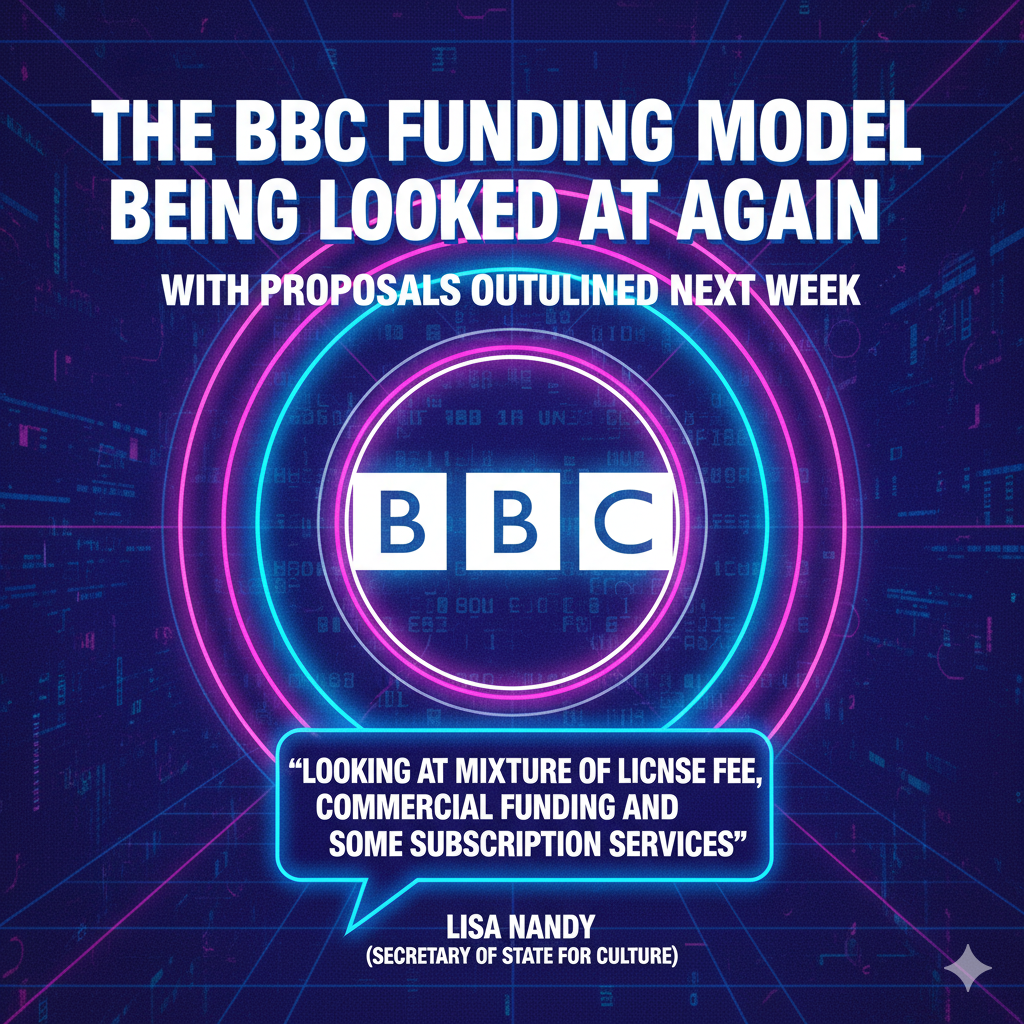
The BBC’s funding model is back under the spotlight once again next week.Lisa Nandy, the Secretary of State for Culture, has been talking about proposals due to be unveiled shortly.While the idea of funding the BBC through general taxation appears to be off the table( for now) a sliding scale licence fee based on house prices is reportedly being considered.A broadband tax has been floated in the past, forcing everyone to pay regardless of usage. It would be hugely unpopular, and for now... Read more
The BBC’s funding model is back under the spotlight once again next week.
Lisa Nandy, the Secretary of State for Culture, has been talking about proposals due to be unveiled shortly.
While the idea of funding the BBC through general taxation appears to be off the table( for now) a sliding scale licence fee based on house prices is reportedly being considered.
A broadband tax has been floated in the past, forcing everyone to pay regardless of usage. It would be hugely unpopular, and for now at least, it doesn’t seem to be on the agenda.
The reality is that a growing number of UK residents simply don’t use BBC services and are perfectly happy not watching live TV. Under the current system, they don’t need a licence. Many of these same households, however, willingly pay for Netflix, Amazon Prime or Disney+, which they see as good value.
Advertising is another option being explored. This would be a major blow to Channel 4 and ITV, and would represent the biggest structural change to the BBC since its inception.
A partial subscription model… placing some content behind a paywall is also expected to be considered.
Everyone has a view on how the BBC should modernise its funding in a fair way. But one thing seems clear: change is coming in the years ahead.
Lisa Nandy, the Secretary of State for Culture, has been talking about proposals due to be unveiled shortly.
While the idea of funding the BBC through general taxation appears to be off the table( for now) a sliding scale licence fee based on house prices is reportedly being considered.
A broadband tax has been floated in the past, forcing everyone to pay regardless of usage. It would be hugely unpopular, and for now at least, it doesn’t seem to be on the agenda.
The reality is that a growing number of UK residents simply don’t use BBC services and are perfectly happy not watching live TV. Under the current system, they don’t need a licence. Many of these same households, however, willingly pay for Netflix, Amazon Prime or Disney+, which they see as good value.
Advertising is another option being explored. This would be a major blow to Channel 4 and ITV, and would represent the biggest structural change to the BBC since its inception.
A partial subscription model… placing some content behind a paywall is also expected to be considered.
Everyone has a view on how the BBC should modernise its funding in a fair way. But one thing seems clear: change is coming in the years ahead.