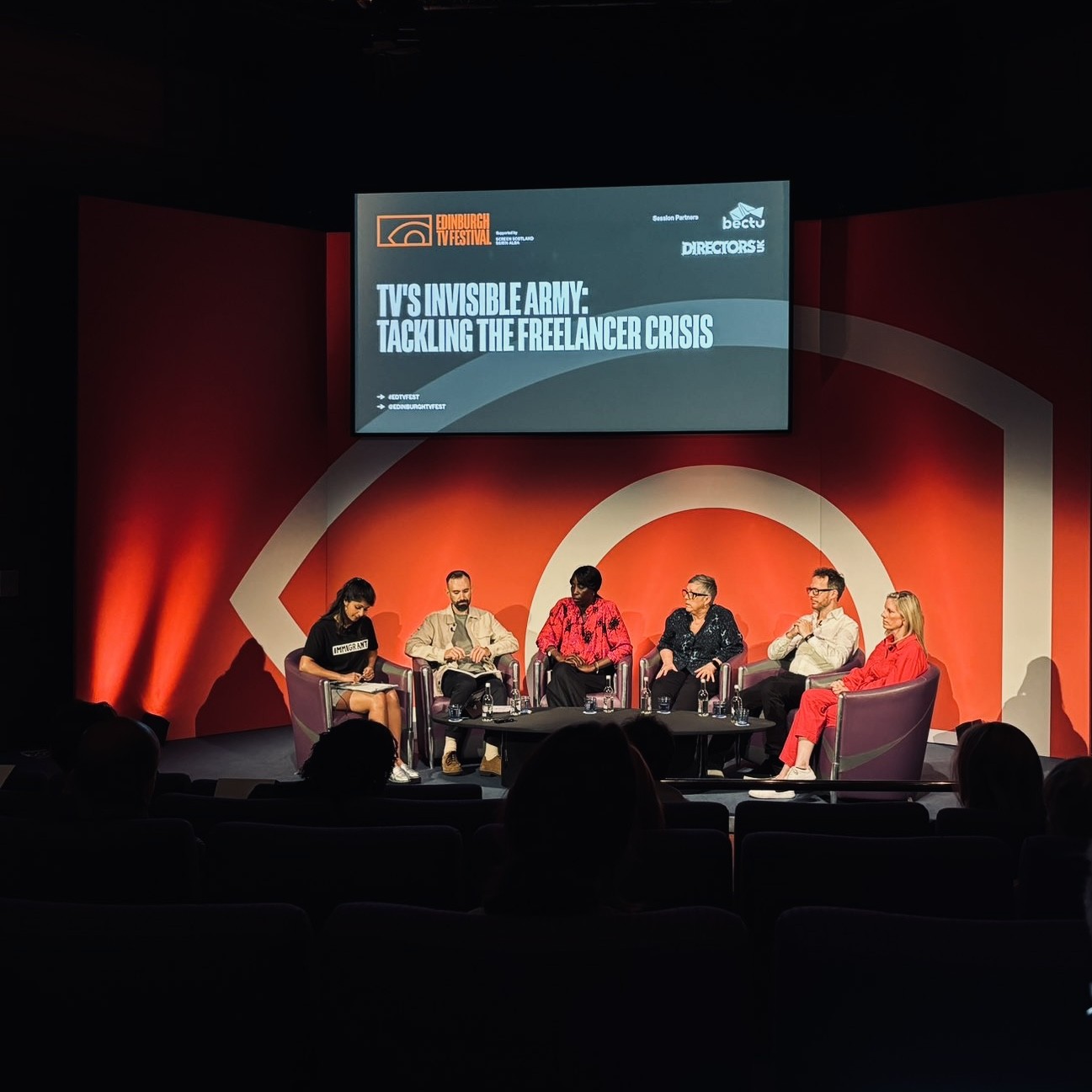
As I journey back from the Edinburgh TV Festival - Supported by Screen Scotland, I’ve been reflecting on my time there this year. It was an honour to represent freelancers on a panel discussing the so-called “freelancer crisis.” But let’s be honest – if there’s a crisis among freelancers, it’s really a symptom of a broader industry crisis. This point wasn’t lost during our discussions.The industry can’t place the burden on freelancers to fix an industry transformation... Read more
As I journey back from the Edinburgh TV Festival - Supported by Screen Scotland, I’ve been reflecting on my time there this year. It was an honour to represent freelancers on a panel discussing the so-called “freelancer crisis.” But let’s be honest – if there’s a crisis among freelancers, it’s really a symptom of a broader industry crisis. This point wasn’t lost during our discussions.
The industry can’t place the burden on freelancers to fix an industry transformation that’s impacting us all. A show of hands in the room revealed a surprising number of freelancers present, but a disappointing lack of commissioners. It’s clear that the challenges we’re facing aren’t the most glamorous topics – some even find it “too depressing” – but if we want change, we all need to be rolling up our sleeves and pulling in the same direction (or as Martin Lewis brilliantly put it during his session: TV should “clean its bloody act up”).
One of the key discussions was around the new Action for Freelancers initiative, which aims to build on the incredible work of the Coalition for Change. As the baton is handed over, I was crystal clear about one thing: freelancers must be at the heart of this initiative, shaping ideas from the ground up. It can’t be a top-down approach. I’m glad that Bectu is at the table, and rest assured, the Unscripted Branch will be feeding back on proposals, ensuring your voices are heard.
But here’s the hard truth – while agreements are being negotiated, freelancers are struggling right now to pay bills and keep a roof over their heads. We’re losing talented, world-class programme makers, and that loss will come at a cost as less experienced individuals step up, often without the necessary training.
Equally concerning is the disproportionate loss of freelancers from underrepresented groups. We desperately need their lived experiences in our storytelling to truly reflect the diverse world we live in. This was powerfully echoed in James Graham and Carol Vorderman's lectures, both of which highlighted the critical role of class – and we know it often intersects with other underrepresented identities.
I took the responsibility of representing freelancers seriously, esepcially as I know many would have liked to attend themselves, but were unable to due to the high costs involved. So to all the freelancers who reached out to me before the festival with your thoughts and concerns: thank you. I brought as many of your points to the table as possible, and for those I couldn’t, I made sure to discuss them with others at and around the festival. It’s crucial that those in stable, staff positions understand the reality of life for the rest of us.
And on a personal note, I also want to extend my thanks to everyone (including the incredible David Olusoga!) who made a point of coming over to speak with me at the festival. Your recognition that change needs to happen in the real world, and crucially not just be talked about, is what gives me hope.
The industry can’t place the burden on freelancers to fix an industry transformation that’s impacting us all. A show of hands in the room revealed a surprising number of freelancers present, but a disappointing lack of commissioners. It’s clear that the challenges we’re facing aren’t the most glamorous topics – some even find it “too depressing” – but if we want change, we all need to be rolling up our sleeves and pulling in the same direction (or as Martin Lewis brilliantly put it during his session: TV should “clean its bloody act up”).
One of the key discussions was around the new Action for Freelancers initiative, which aims to build on the incredible work of the Coalition for Change. As the baton is handed over, I was crystal clear about one thing: freelancers must be at the heart of this initiative, shaping ideas from the ground up. It can’t be a top-down approach. I’m glad that Bectu is at the table, and rest assured, the Unscripted Branch will be feeding back on proposals, ensuring your voices are heard.
But here’s the hard truth – while agreements are being negotiated, freelancers are struggling right now to pay bills and keep a roof over their heads. We’re losing talented, world-class programme makers, and that loss will come at a cost as less experienced individuals step up, often without the necessary training.
Equally concerning is the disproportionate loss of freelancers from underrepresented groups. We desperately need their lived experiences in our storytelling to truly reflect the diverse world we live in. This was powerfully echoed in James Graham and Carol Vorderman's lectures, both of which highlighted the critical role of class – and we know it often intersects with other underrepresented identities.
I took the responsibility of representing freelancers seriously, esepcially as I know many would have liked to attend themselves, but were unable to due to the high costs involved. So to all the freelancers who reached out to me before the festival with your thoughts and concerns: thank you. I brought as many of your points to the table as possible, and for those I couldn’t, I made sure to discuss them with others at and around the festival. It’s crucial that those in stable, staff positions understand the reality of life for the rest of us.
And on a personal note, I also want to extend my thanks to everyone (including the incredible David Olusoga!) who made a point of coming over to speak with me at the festival. Your recognition that change needs to happen in the real world, and crucially not just be talked about, is what gives me hope.