Making Barbaric Genius
When I first got the idea to tell the story of John Healy's meteoric rise and equally dizzying fall from grace, I thought it was tremendously commercial – after all, it's a story with mystery, intrigue, redemption of a sort, involving violence on the mean streets of '60s and '70s London as well as glamourous Hollywood interludes and the arcane world of high-level chess.
When I finished the film almost five years later, it had almost bankrupted me, turned my hair partially white and forced me to learn how to use a camera, how to record sound, how to conduct an interview and how to produce – all at the same time, sometimes while walking backwards on an icy slope.
It was a long way from my beginnings as a drama director with a crew of between sixty and a hundred people doing everything imaginable on my behalf.
Despite the difficulty involved in making a feature documentary more or less on one's own, I now think that was the making of the film.
Had I continued as I started – with a small, talented and professional crew coming between me and John Healy – I doubt I would ever have gotten as far as I did in unpeeling the layers of his extraordinary personality. And I think that's what people respond to when they see the film: a sense of two people who, over a long stretch of time, gain each other's respect and trust. It's a human process, one that we are all familiar with, but a difficult one to capture.
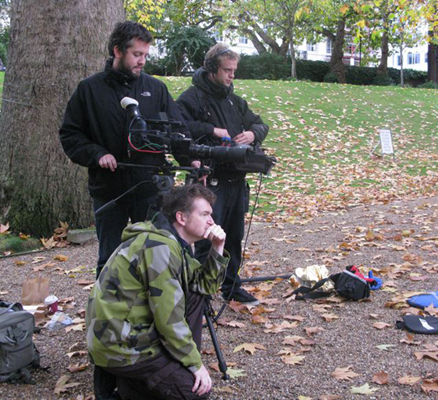
Increasingly, the notion of a self-shooting director is becoming something that sounds cheap and corner-cutting. The documentaries that have made most commercial sense in recent years have often been those that have taken the tools of high-end drama and turned them to documentary use. I've been travelling in the other direction, trying to learn what DA Pennebaker and the Maysles brothers taught themselves – the art of being in a room with somebody and getting them to forget there's a camera there, while never yourself forgetting that you're making a film.
To me the self-shooting director is at the core of what documentary can do that drama can't – it allows a film to capture what would ordinarily pass unnoticed, the dynamic that can happen in a room between two people. My favourite moments in Barbaric Genius are the scenes where John and I circle each other warily, trying to figure each other out, and where John finally allows his carefully tended veneer of toughness to slip and the real, funny, human and vulnerable man beneath to show through.
When I listed all the skills I had to learn during the making of this film above, I think the one that sounds easiest but is by far the hardest is learning to interview.
Because when you really talk to somebody, when you want them to talk to you, you have to look them in the eye and speak from the heart. This is hard to do while also attempting to remain in focus and keep an eye on the sound levels, but if you can't do it you probably can't make this kind of film.
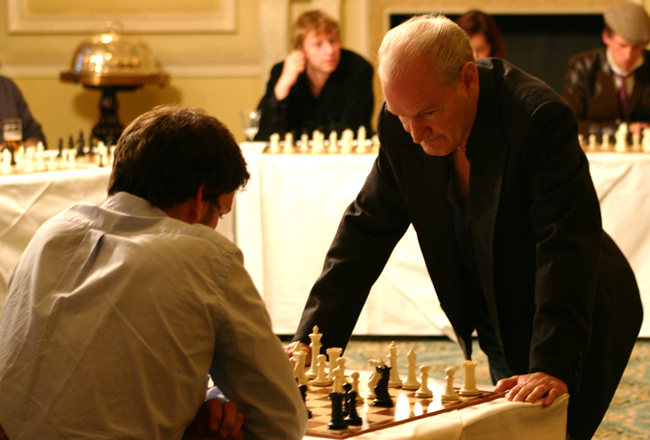
Photo & cover photo: Glyn Roberts
- Barbaric Genius (Paul Duane for Screenworks) is nominated for Best Newcomer Documentary at Grierson 2012: The British Documentary Awards