A prison fire that killed more than 300 inmates in Honduras in February brought the country to the headlines and to the attention of the “reported” world.
We decided to take a closer look at what’s going on. The statistics, especially when it comes to corruption, violence and poverty- painted a bleak picture. San Pedro Sula- one of the three large cities in Honduras now holds the dubious designation of murder capital of the world, with up to 15 killings a day. Many are desperate to escape and find a better future somewhere else, making them particularly vulnerable, easy prey for criminal gangs.
We left for Honduras knowing that human trafficking is a huge problem in Latin America, especially the trafficking of women for sex trade. In recent years drug cartels are finding it a more profitable business than the smuggling of weapons!
When we started talking to sources, they were telling us that women are disappearing and that many are being trafficked. We spent the first few days in the capital of Honduras, Tegucigalpa, trying to get closer to the story. It’s always a challenge when you work in a foreign country, and without a lot of time to build contacts and relationships, and this was such a sensitive subject.
One of the most difficult things about the story was that everything seemed to be happening under the surface: you are not going to see women getting snatched off the streets and sold to brothels. After days we felt like we were getting nowhere and had to try a new approach.
We came up with the idea of tracing back their steps and starting where the women may end up. We heard that most of them never make it beyond Mexico. We also heard about a group of mothers from Honduras who were looking for their daughters. In almost all of the hundreds of stories they collected, the last contact was made from Southern Mexico.
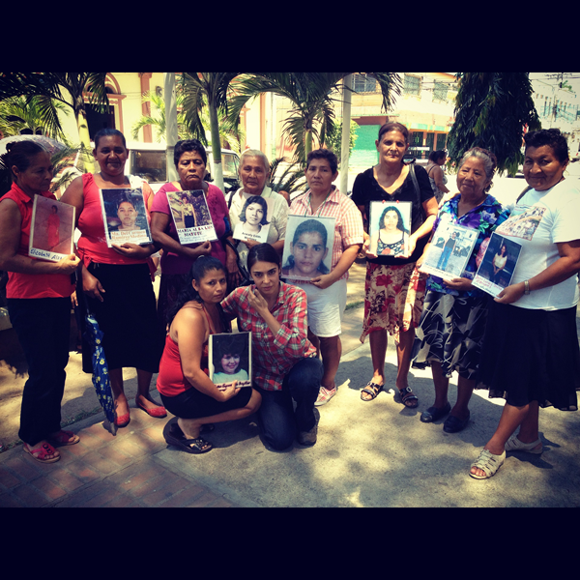
Ramita Navai with a group of mothers who are looking for their missing daughters
We drove south through Guatemala to Mexico. Once we crossed into the Mexican state of Chiapas we started getting an idea of how things work. About 50 meters from the official border, right by the river, there was another crossing. For 50p you can get ferried over from Guatemala-no questions, no inspections, in broad daylight, and without interruption. Loud music in the background made it all seem very festive, I almost forgot that this is a carnival of smugglers- drugs, goods and, of course- people. A little stroll on the riverbank (and getting chased by someone flashing a knife) proved how dangerous the area really is.
Many believe that the big drug cartels (especially the notorious Los Zetas) control parts of southern Mexico and the prostitution rings that operate there, so we had to be very careful. Helped by an excellent fixer and a wonderful translator we managed to start navigating this very complicated underworld. We spent the next days trying to meet not only trafficked girls but also traffickers and understand how it works.
A typical day would begin with a visit to a prison and end with a round of brothels. We became regulars in the Red Light districts in the area. It took a lot of work to get the girls to open up and talk to us (candidly) about what happened to them. To get them to do that on camera and sign on a release declaring the film will be available on the internet (and potentially seen by their families) took more work, but eventually we got there.
We were just getting ready to leave when we got a call-- a trafficker (who is not in prison) was willing to talk to us. We rushed over worried he’ll change his mind. His matter-of-fact account of the mechanics of the trade in vulnerable women sent chills through my spine as I was filming. He tried to explain that he had no choice- he was a victim of trafficking too.
PS
A little catch up with our fixer the other day revealed that one of the trafficked Honduran girls we spoke to, just found out she’s pregnant and HIV positive. It made me so sad.
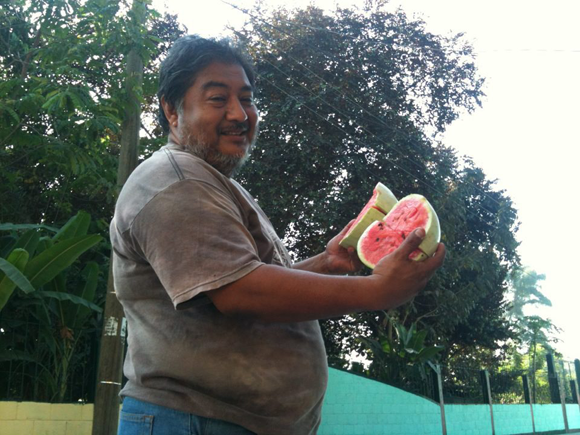
Fixer Juan De Dios Garcia Davish
Talya Tibbon directed this season’s last episode of Unreported World. Honduras: The Lost Girls airs on June 8th on Channel 4 at 19:30.