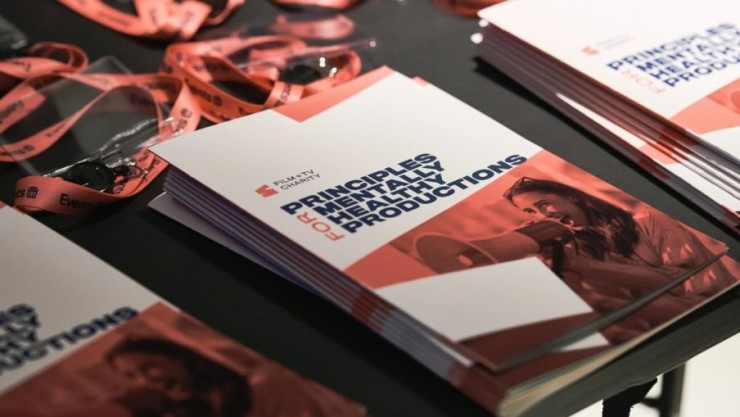
The downtown in production risks making the TV industry’s endemic mental health crisis even worse because producers feel unable to raise problems with commissioners, the Edinburgh TV Festival was told.
Speaking at the festival, Marcus Ryder, head of the Film and TV Charity, said the pressure to win work in the current climate meant producers felt unable to have ‘’honest conversations’’ with commissioners if their budgets or schedules were unrealistic. That, in turn, led too excessive demands on the production teams, exacerbating the poor mental health of people across the industry.
Ryder said there was something ‘’really rotten’’ in the TV industry, citing the FTVC’s latest Looking Glass survey which found that 30% of people working in production had had suicidal thoughts over the previous 12 months. That compared with just 6% in the general working population.
The research, the charity’s annual snapshot of the wellbeing of the UK screen industries, found that just 12% of people thought it was a mentally healthy place to work, while 41% had experienced bullying, harassment or discrimination year.
Asked where responsibility lay, Ryder said there were certain ‘’pinch points’’ that were preventing ‘’good intentions’’ resulting in better mental health conditions and outcomes.
‘’We speak to commissioners and MDs [of Indies] all the time. The commissioners say they want to know [if there is a problem] but the Indies aren’t telling us.
‘’But the stress is massive [on MDs] with Indies trying to produce a programme to a budget they can’t. But they don’t feel they have the relationship with the commissioning bodies to ask for money. There’s a power dynamic there which prevents good communication which we need to recognise.’’ That problem had got worse with the fall in commissioning over the last two years.
Kelly Webb-Lamb, founder of indie Mothership, agreed that a ‘’lot of stress is about money’’, but added that responsibility for wellbeing on a production ‘’ultimately lies with the producer.’’
‘’In this climate, producers can be worried about raising things that can cost more. We need to change that so it’s an expected conversation at point of commission
But it’s ‘’our company. We’re hiring people. It’s our show,’’ she said. She said Mothership had used the charity’s Whole Picture Toolkit to improve how it approach the wellbeing of crew on recent productions. ‘’It’s made a massive difference,’’ she said.
Hamish Fergusson, creative director at Passion Pictures, said that in unscripted there had been a ‘’long culture of concern for contributors’’ which was now being extended to production crew.
‘’We have kick off meetings and sessions on dark docs, an open space where people can share with each other. It really helps bond the team.’’
Lara Singer, producer at Big Talk Studios, said there need to be a culture reset with the wellbeing of programme-makers prioritised over profit. ‘’On every production, there are people who are pushing on [even though] they are ill. We need to be open that TV is a human space, run by humans not by money.’’

The Talent Manager