When I left University I had no aspirations to work in TV. I just had no idea how to go about it. I didn't know anybody working in the industry or how to get into TV companies. There were only four channels and no internet.
I knew about the prestigious BBC Production Trainee Scheme (PTS) which took six graduates a year. I thought my chances were incredibly slim as places were highly sought after so I didn't even apply.
I loved to write and saw an ad in the local paper for an editorial assistant on a sales and marketing trade journal. I applied and was lucky and got my first job helping produce this monthly magazine. I was trained in subbing, layout and wrote features and monthly news. I progressed to assistant editor and then editor when a sister title was created. I wrote about marketing and sales techniques, training and conferences. I designed the layout and look, introduced new features and ideas and even went on press trips and new product launches.
I loved writing and was genuinely excited when every month the lorry would arrive with box loads of magazines. But the recession kicked in and as advertising revenues fell, they had to shut my magazine and my role was made redundant.
I became freelance and decided to write about an area I was interested in: music. I would come up with ideas for music features and interviews and call news editors to sell them. It was nerve wracking and hit and miss. Sometimes soul destroying if they turned an idea down, but slowly over time I started being asked to write cover stories as well as selling and writing my own ideas.
As I had no journalism training I decided to enroll on a post grad course in magazine journalism at the London College of Printing (now London College of Communication) and wrote and studied at the same time. I did a work experience placement at The Independent and had one of my opinion pieces published. It was picked up by local London news and I ended up on Your Shout. That three minute opinion piece is now in the BFI
Anna Richardson, now a Channel 4 TV presenter was also on my course. She told me she was only doing the post grad course to help get into TV as someone had advised her that would be useful.
We became friends and she would tell me stories of the job interviews at various TV companies - as she struggled to get her first paid TV job. Despite being confident, talented and driven it was tough.
She popped over to my flat one day after an interview at Wall to Wall Television for a topical, weekly entertainment show called Big City. They had asked her in depth questions about her music knowledge. She said she hadn't been able to answer and so hadn't got the job.
But I could answer - I had been freelancing as a music journalist for four years writing for Music Week, DJ Magazine and Record Mirror, as well as The Guardian and The Independent. I had a great contact book, files of interviews and cuttings and specialist music knowledge.
When I heard that Wall to Wall were looking for a music researcher, I rang the switchboard got the series producer's name and details and sent in my CV and covering letter.
I had a call inviting me in for an interview with Nicola Gooch, the series producer. I had seen the show so I knew a little about it. She asked me lots of detailed questions about the show and what stories I would cover. she asked what ideas I had for the progamme. She asked me about my job - what I had written and who I had interviewed and crucially where I had contacts.
When I heard what the job entailed - coming up with ideas, setting up and researching items for the show I knew I could do it. However, although positive in the interview she said before I left, 'but you don't have any TV experience…'
A few days later I was asked to back to meet the executive producer, Julie Clive. She was tougher asking me how I would go about setting up shoots and interviews when I didn't have any TV experience.
I had a call from Wall to Wall asking me to send over examples of my work - my cuttings. I kept copies in files, as I always sent examples of my work to new magazines when I was pitching ideas. I sent a mixture of front cover interviews, features and news.
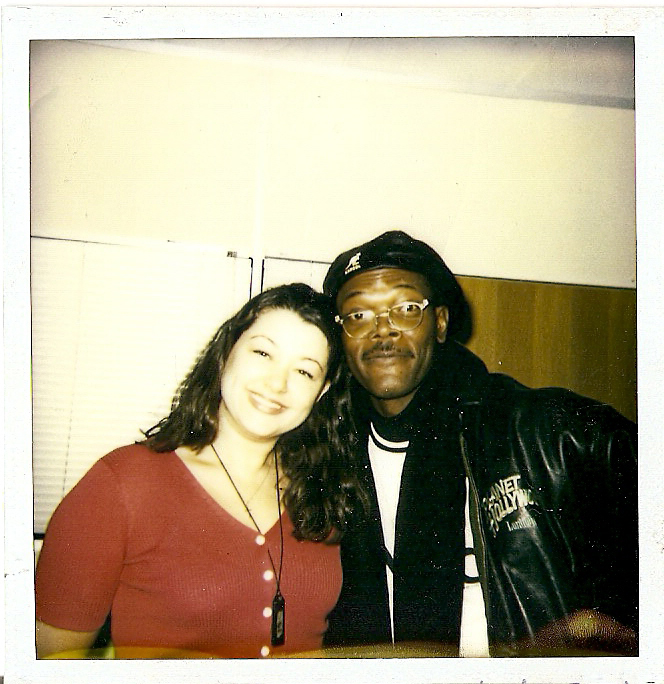
After an agonising wait the production manager rang me and offered me a job as a junior researcher on a probationary six week contract.
I was thrilled but nervous. The job was fast paced with a big and established team - and all the other researchers had years more experienced than I - despite being younger.
I tried to hide my nerves best I could. I knew how to write, how to sell my ideas, get access and which bands to book and who to book them through. I tried to be methodical and organised to make sure I checked my work I didn't make mistakes. I wrote pre shoot scripts and interviews - all very similar to when I prepared my own interviews. So much of the work was journalism.
But there was so much TV knowledge to learn. I was new to the industry and didn't know where to look let alone train. It had never been a long term plan to get into TV - just an opportunity that arose. So I'd never done any research. There was no training manual, book and no websites where I could look.
And even so - I didn't have time. I had to learn as everyone does - on the job quickly but with no running or work experience to give me an idea what to expect.
I watched my fellow researchers, talked to them and colleagues at Wall t o Wall. I tried to glean as much understanding and learn as many technical terms as I could. I'd never heard TV terms like 'cutaway' or GV or rushes, offline, online or dub before. It was all alien to me.
I'd say yes to what was asked of me, and then go and figure out how to achieve it or ask if I was desperate.
I wrote call sheets, set up shoots, found locations and talent, clear music and archive and write presenter briefs. I booked bands who had been previously been inaccessible.
It was challenging and nerve wracking. The show was topical and transmitted weekly. Each week I had to set up a shoot and sometimes, two - for single films and the main feature. There were regularly last minute changes to locations, talent and stories. Often the day before a transmission my director would call me from the edit, asking me to clear a track that was playing in the back of a club interview. It was often a song that wasn't even signed or released and on a white label. An impossible task. No was not an option as the item had to go out with the music cleared.
If I didn't know the track, I knew who to ask - the DJ, or my music contacts - DJs, artists and pluggers, to help.
Plus I was still trying to book different bands - one for every week - and access wasn't always easy.
It was tough but I ploughed on. After six weeks I was called into the series producers office. She asked me to sit down and I felt myself going red. I was about to be fired. She said that they'd like to extend my contract and to promote me to researcher.
I was thrilled and relieved but never complacent. I never lost that fearful feeling which drove me on. TV production is exciting but challenging - you're constantly having to come up with creative solutions and ideas. But I was determined, I'd been given a chance and I wasn't going to blow it.
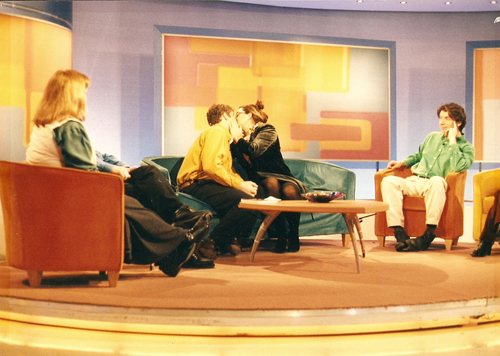
Elsa as a spoof expert on five's company for an item on kissing, with presenter Nick Knowles looking on
I look for that determination, resilience and also confidence (despite lacking it myself!) in producers, new entrants and researchers when I am doing interviews no matter what their background or experience. Being able to communicate confidently is as important as your production experience.
I freelanced in production and development before becoming a talent manager. After constant requests for advice, support and help with CV writing and networking I came up with the idea for How To Get A Job in Television
I realised that there was still no TV industry manual or guide written by someone working in the industry, despite the wealth of advice and resources on the internet. I pitched the idea to A&C Black who gave me a contract and suggested I take 12 months to write it.
In between working I interviewed leading producers I'd worked with, researchers and key industry figures to deliver a comprehensive 300 page guide. How To Get A Job in Television was published in 2009 in conjunction with The Guardian and is still in print published by Bloomsbury/Methuen.

It's never been revised or updated and some of the producers profiled have moved on or left the industry. So I decided to self publish a more concise, companion book with more up to date information and resources. It's taken me four years to write Get in and Get on In Television, in between working full time and my family, probably the longest lead time ever. But it's advice is still as timely as ever.
Elsa Sharp is a talent manager at BBC Factual Production, part of the Production Talent Network.
Get in and Get on in Television is available on Amazon on most devices, Smashwords and at www.elsasharp.com